The human virtual twin
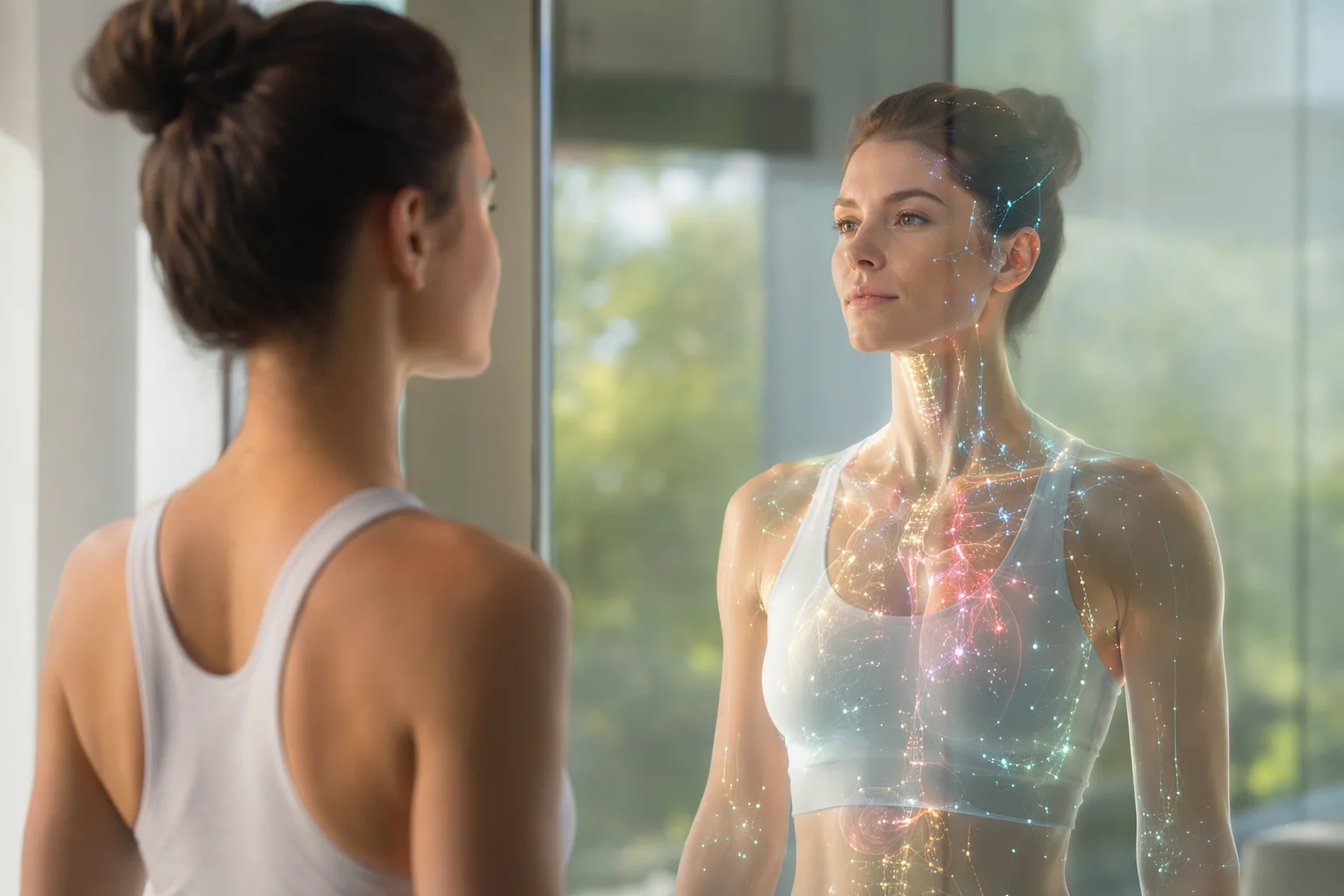
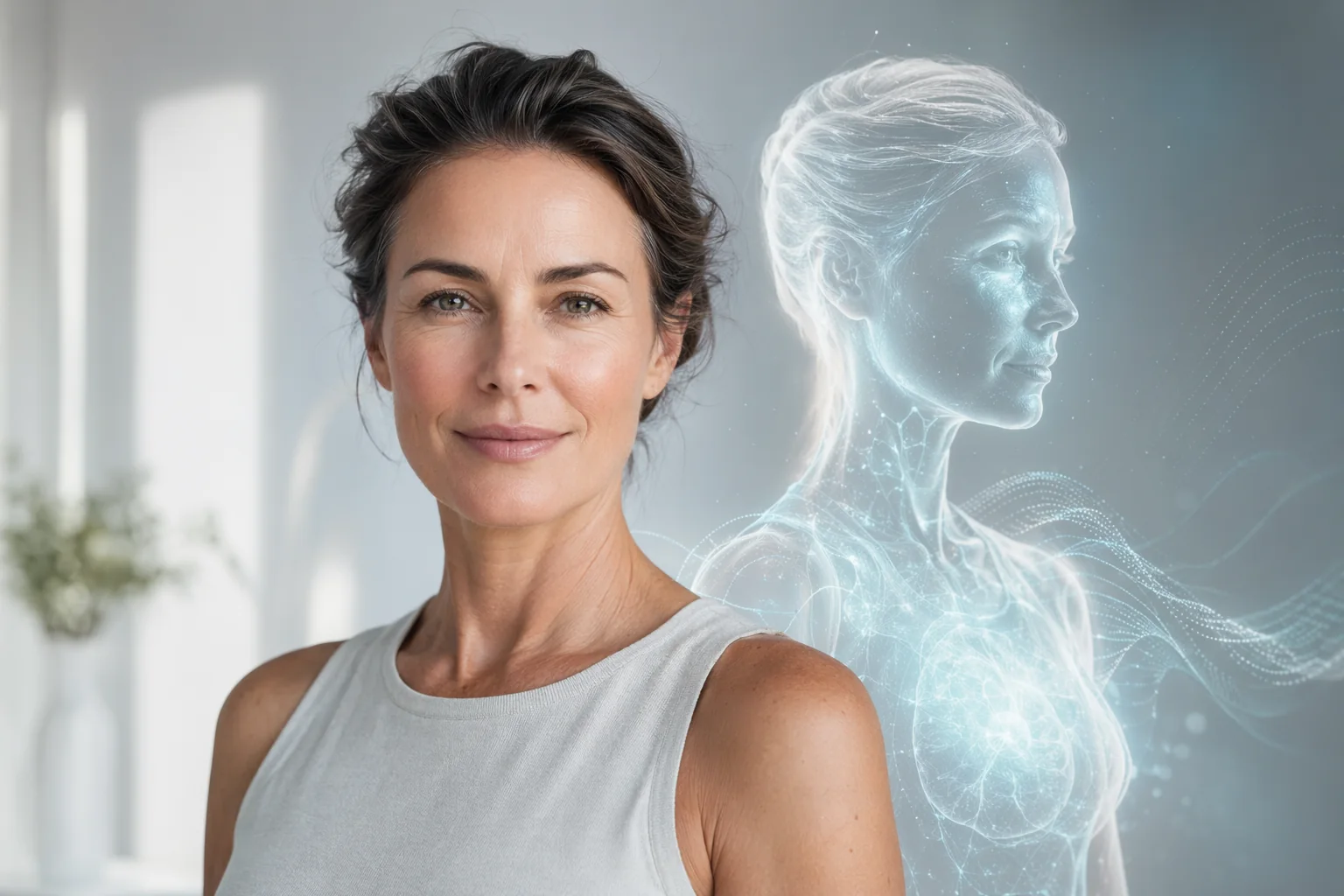
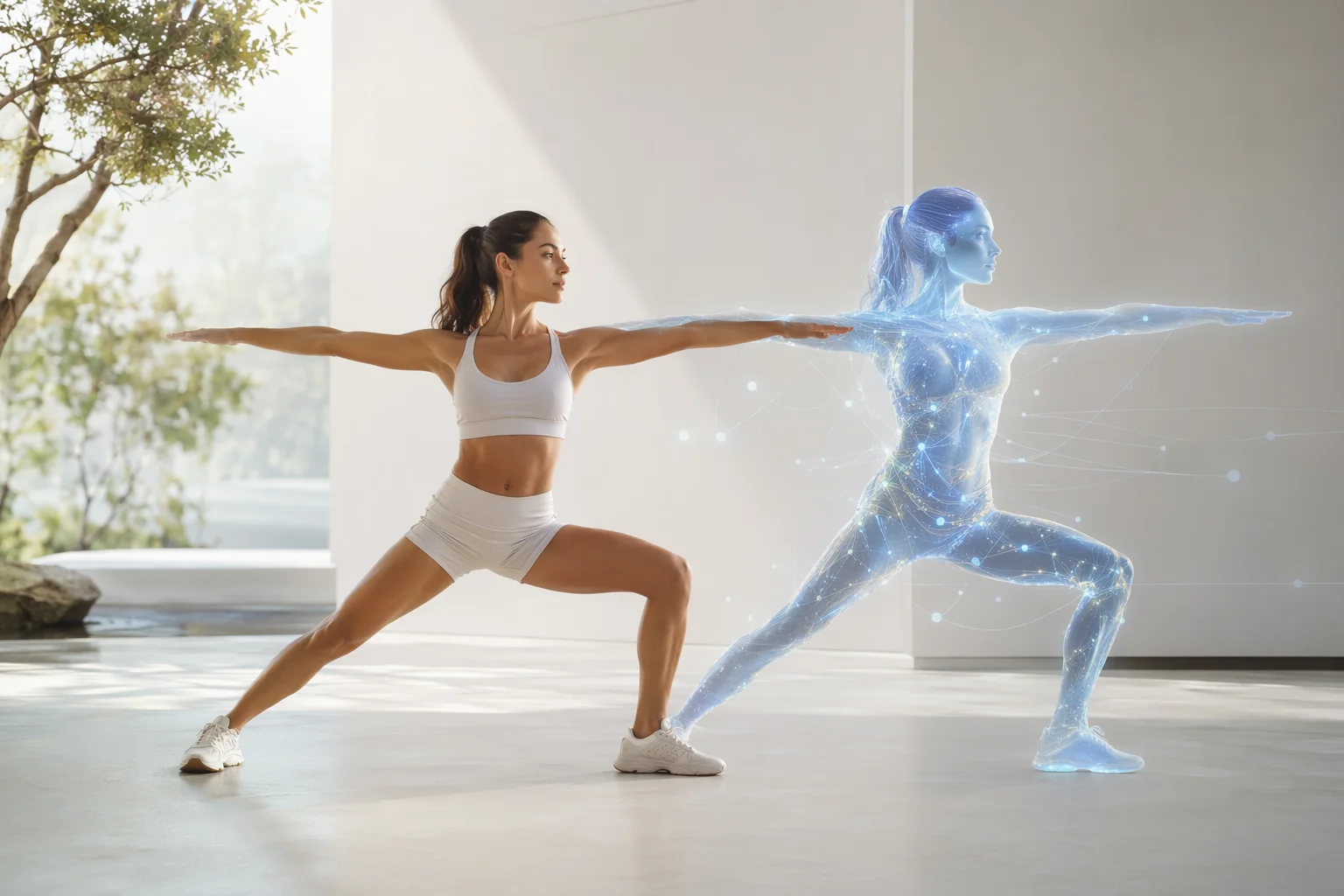
What if your body had a virtual double?
01
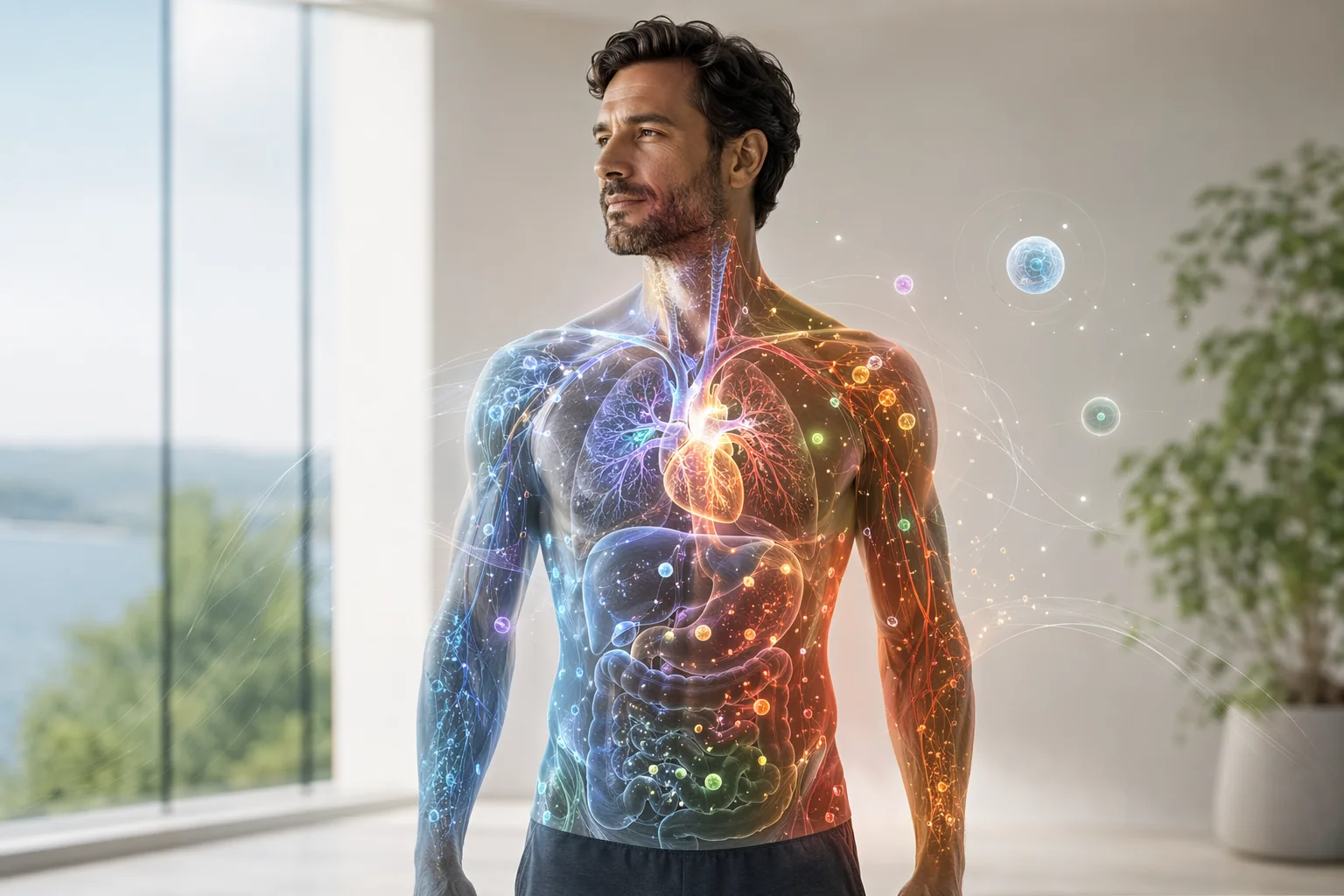
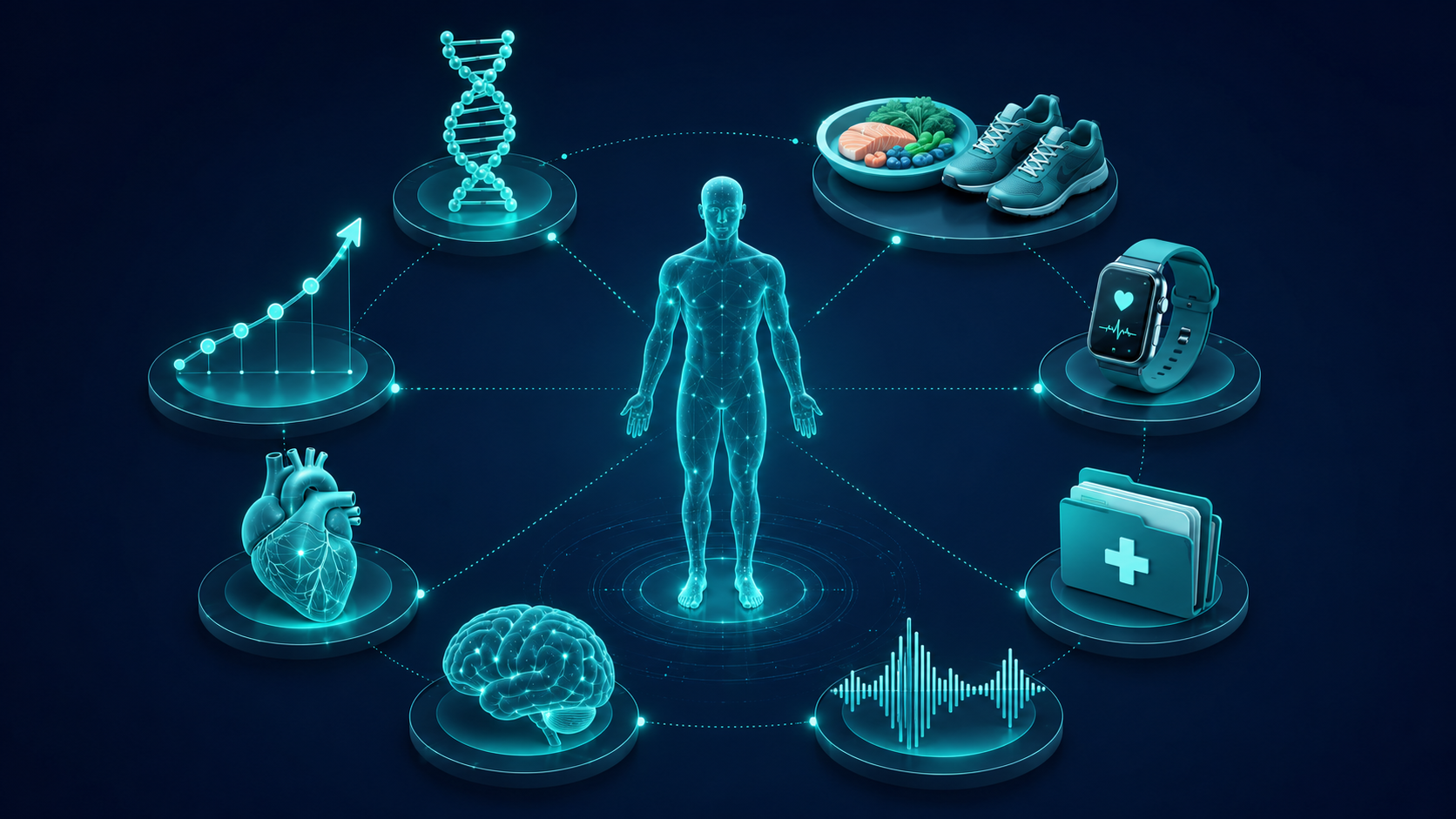
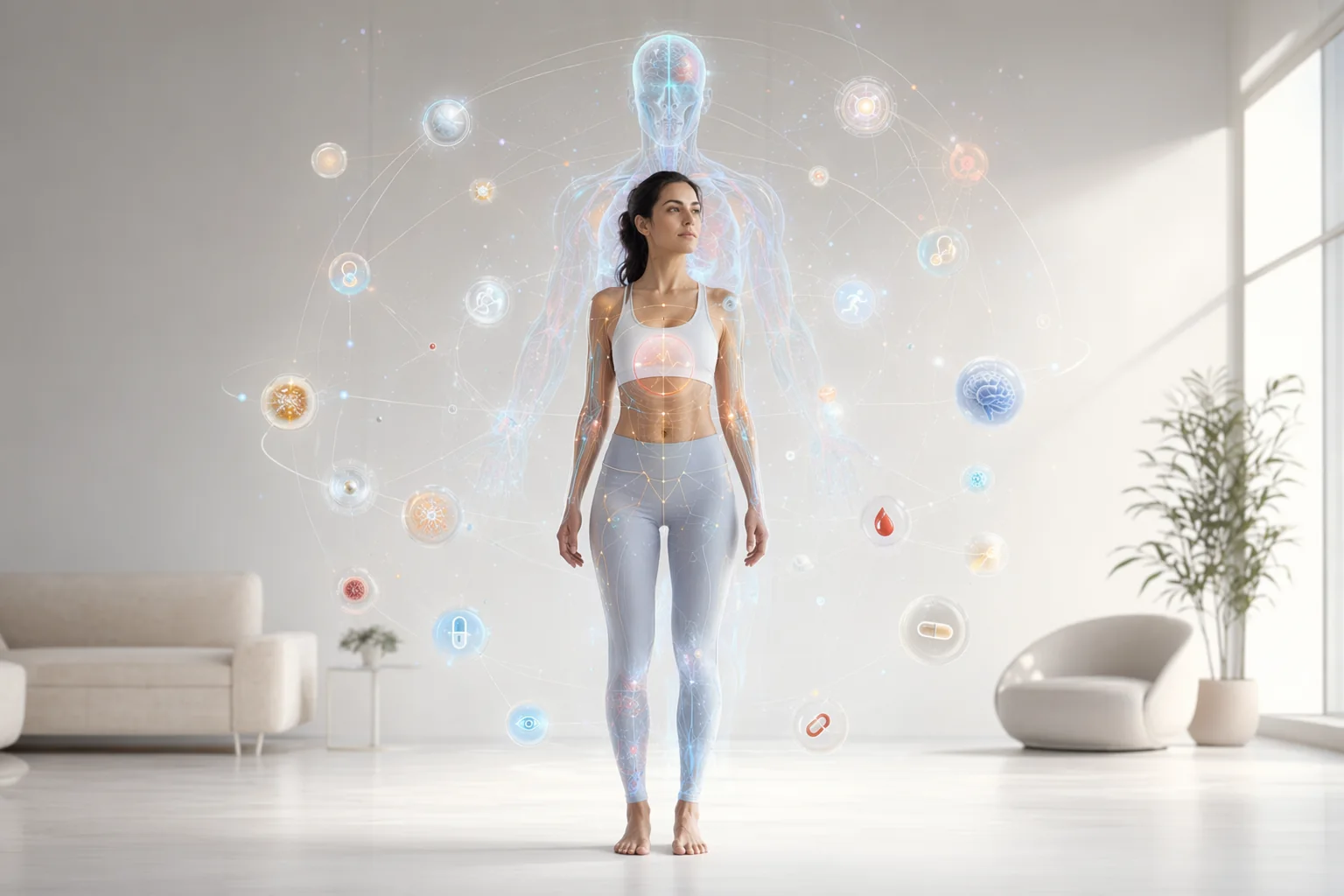
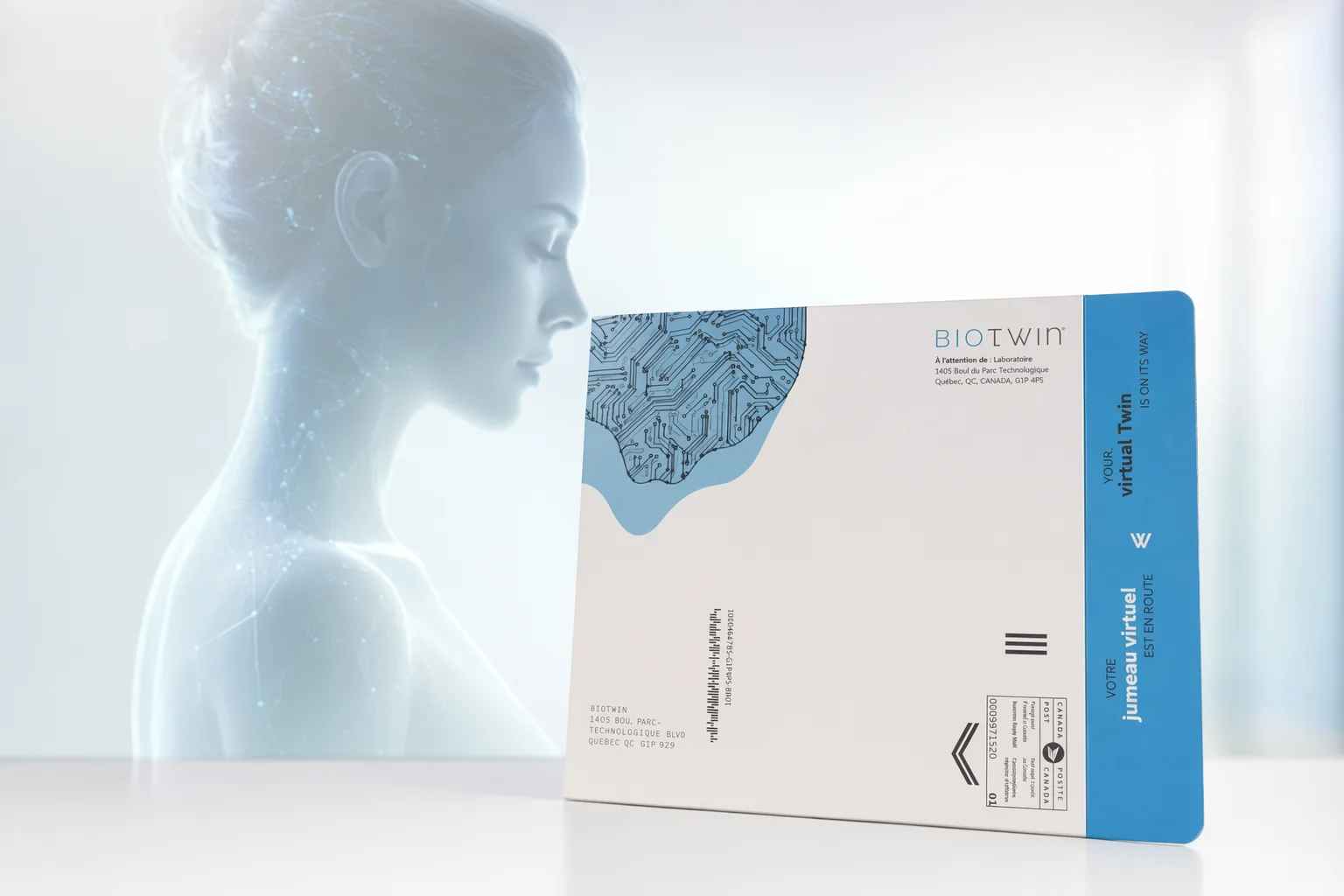
BioTwin applies to human biology an idea already used to understand complex systems: create a virtual representation of the real thing, then keep it updated with data.
01
Act 1
The challenge.
02
Before talking about a solution, you have to size up the problem: human biology is a system of extreme complexity, unique to every person.
Act 1 · The challenge
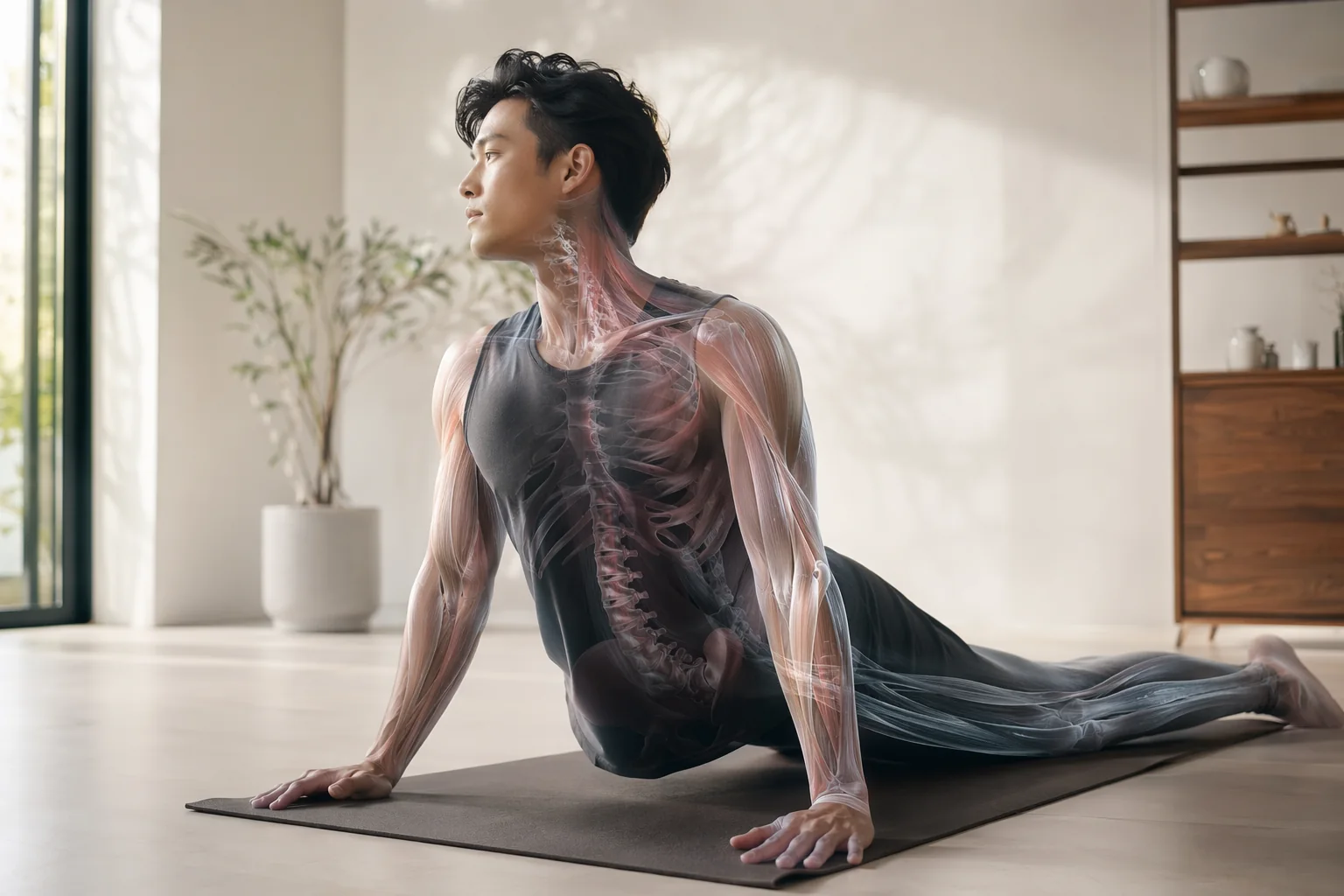
Your body is a factory of extreme complexity.
03
Commonly cited order of magnitude: roughly 37 trillion cells, a dozen major systems and dozens of organs working together at all times.
Act 1 · The challenge
Tens of trillions of cells, working together.
04
No organ works in isolation. That is why an isolated measurement rarely explains what a person is experiencing.
Act 1 · The challenge
And all of it changes constantly.
05
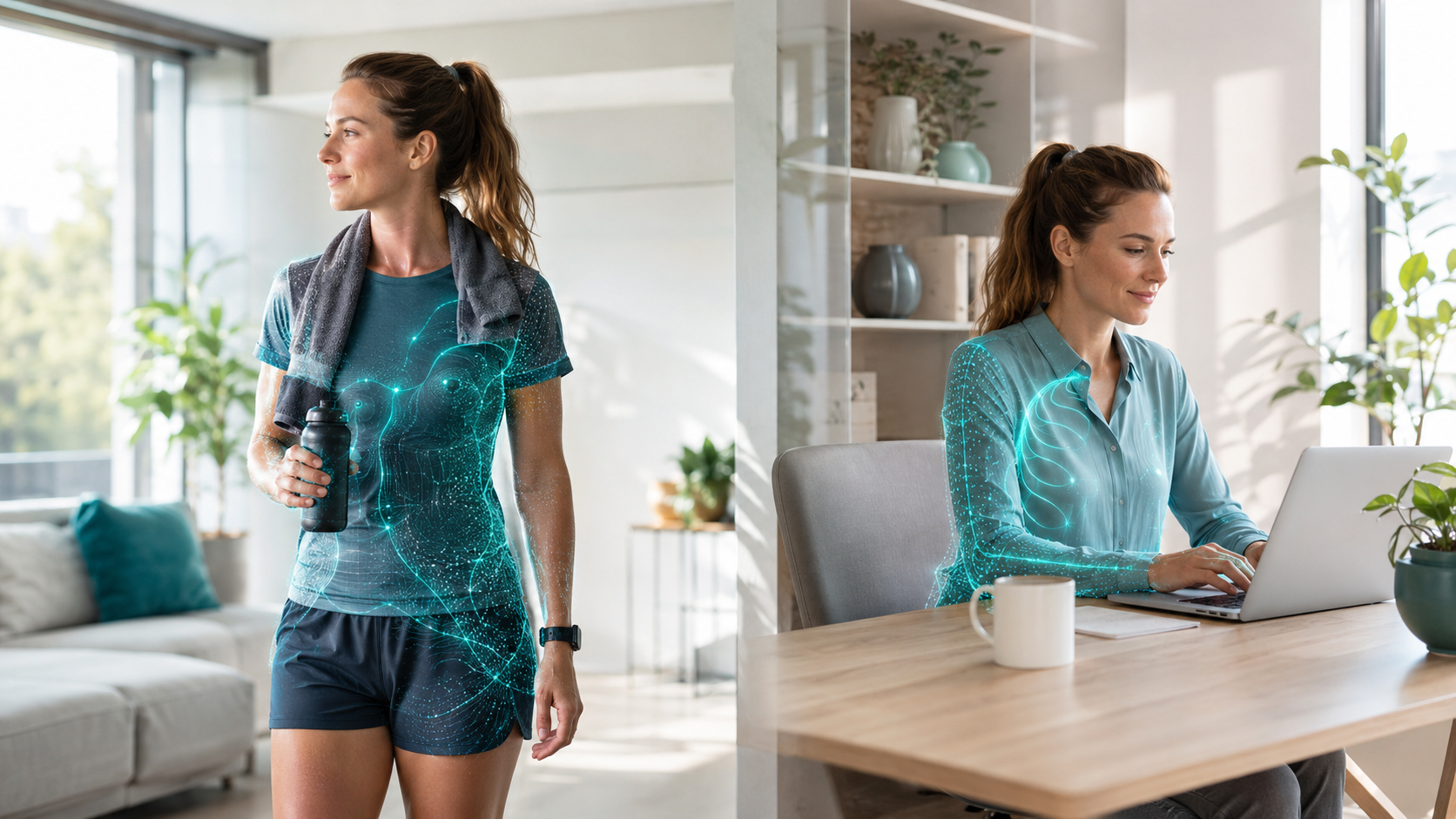
Sleep, activity, food, stress, age and environment shift what happens inside, day after day.
Act 1 · The challenge
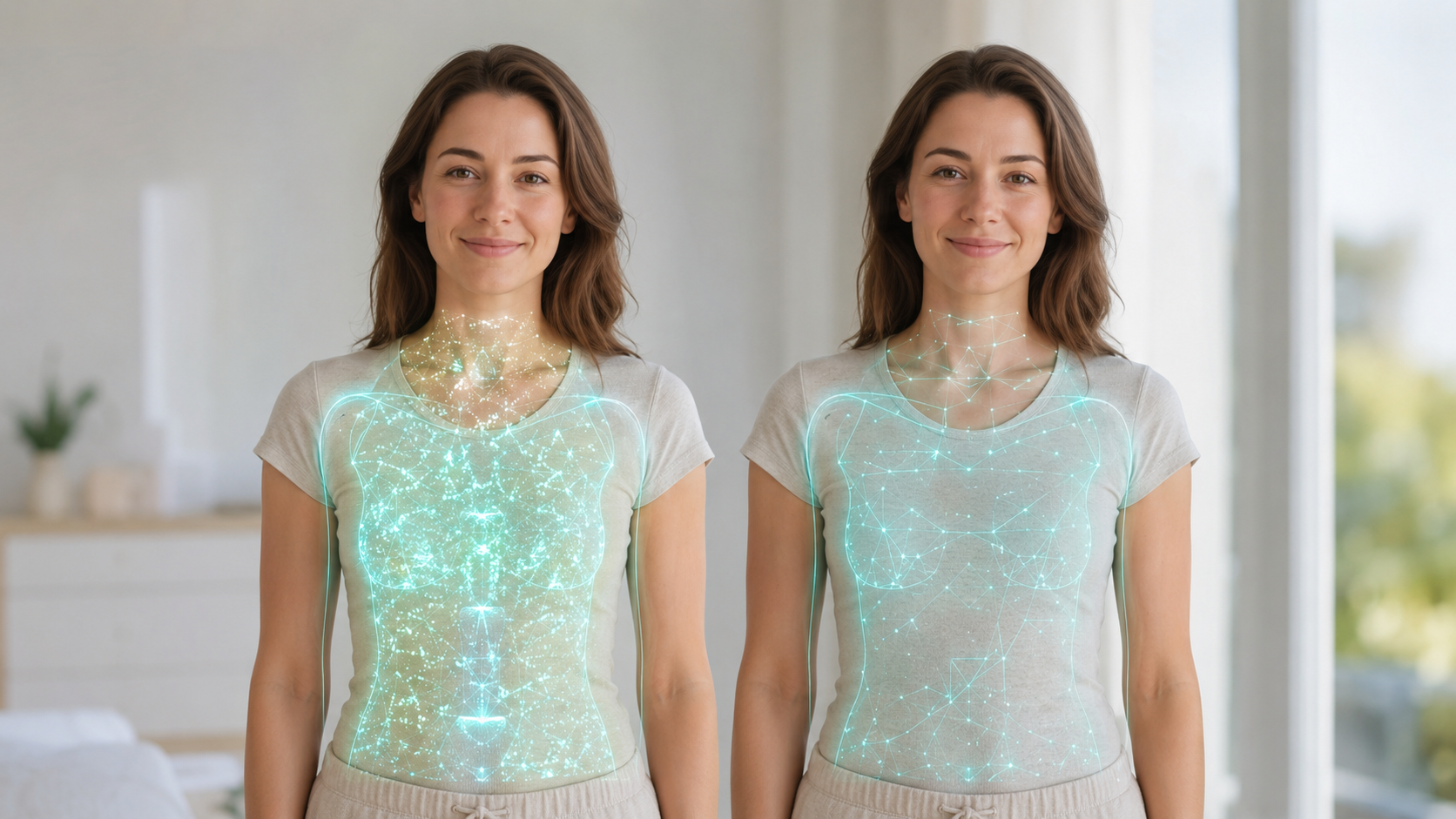
Even identical twins do not have the same biology.
06
The genetic make-up may be identical, but lifestyle, environment and health history open up real differences.
Act 1 · The challenge
What affects you does not affect your neighbour the same way.
Genetics and environment
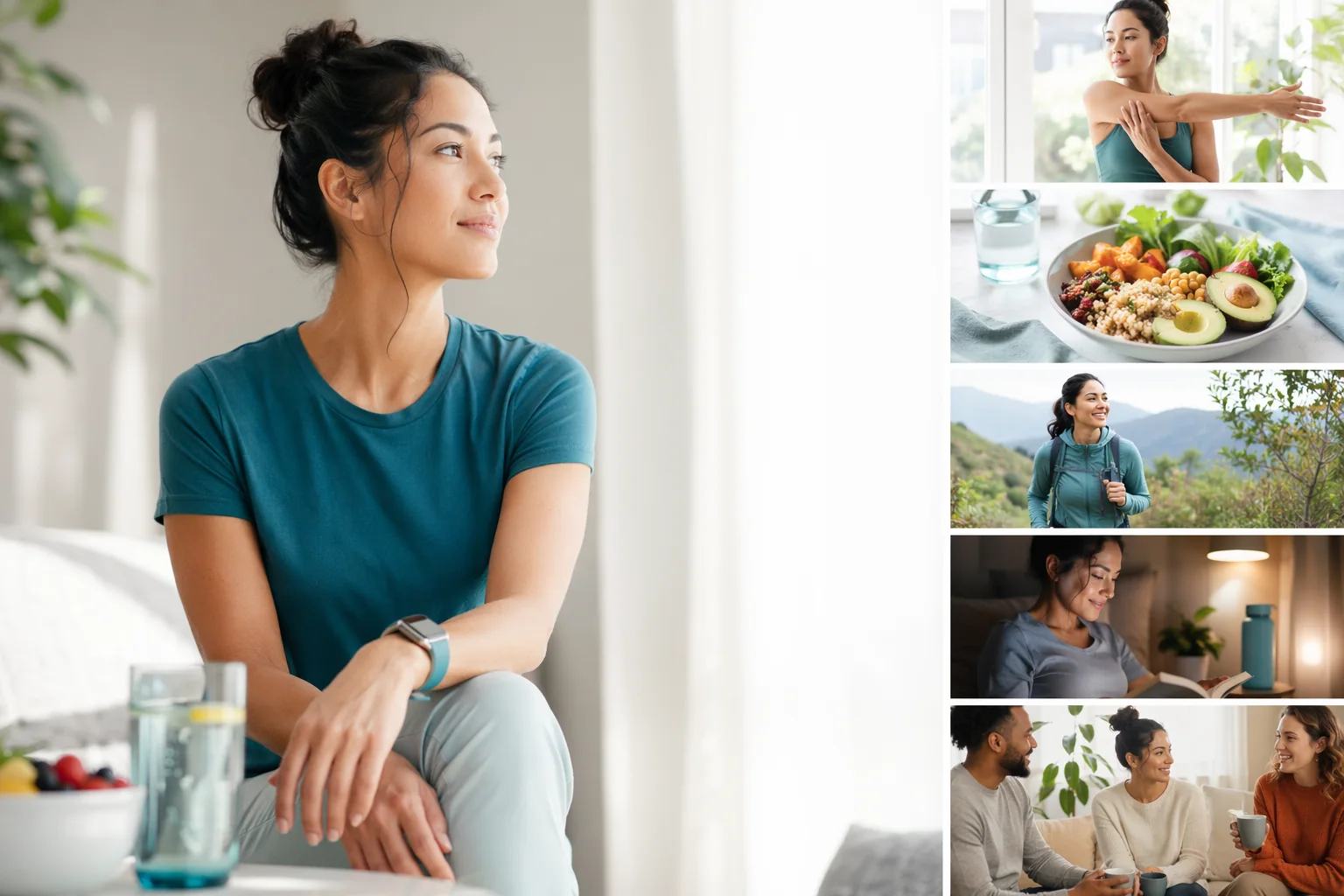
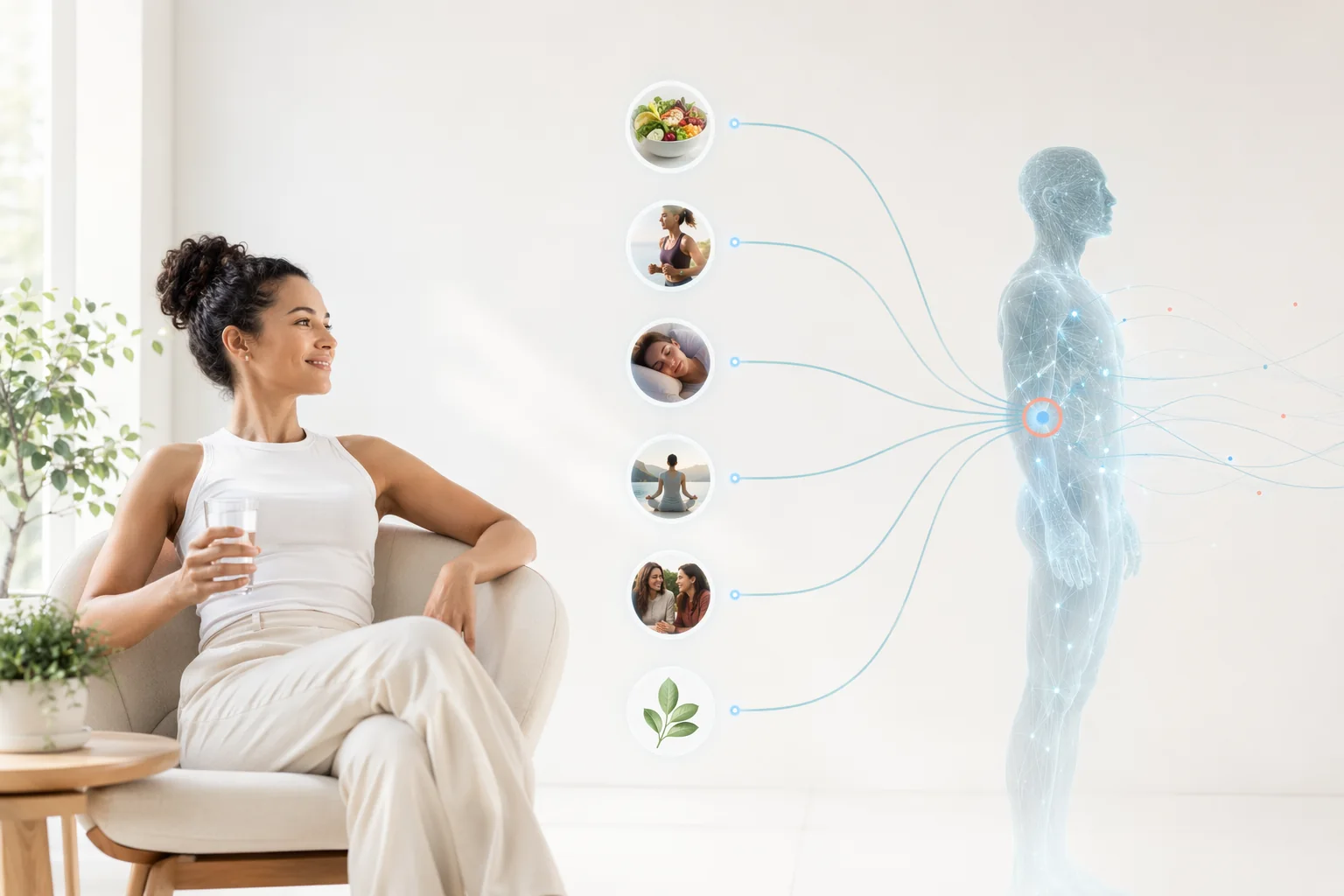
Lifestyle habits, food, exertion
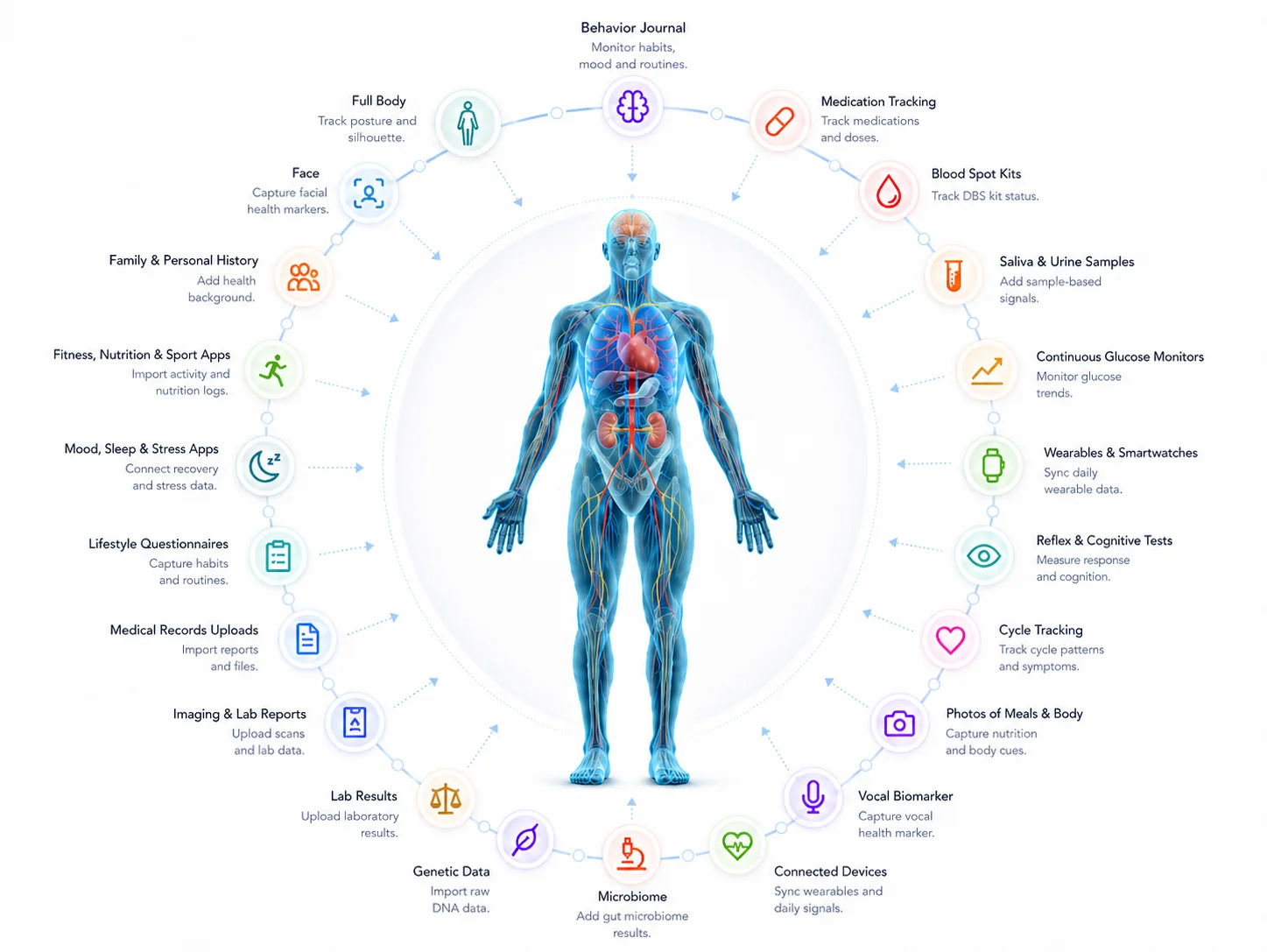
Health conditions and medication
07
This is where the need for personalization comes from: the same recommendation does not produce the same effect in two people.
Act 1 · The challenge
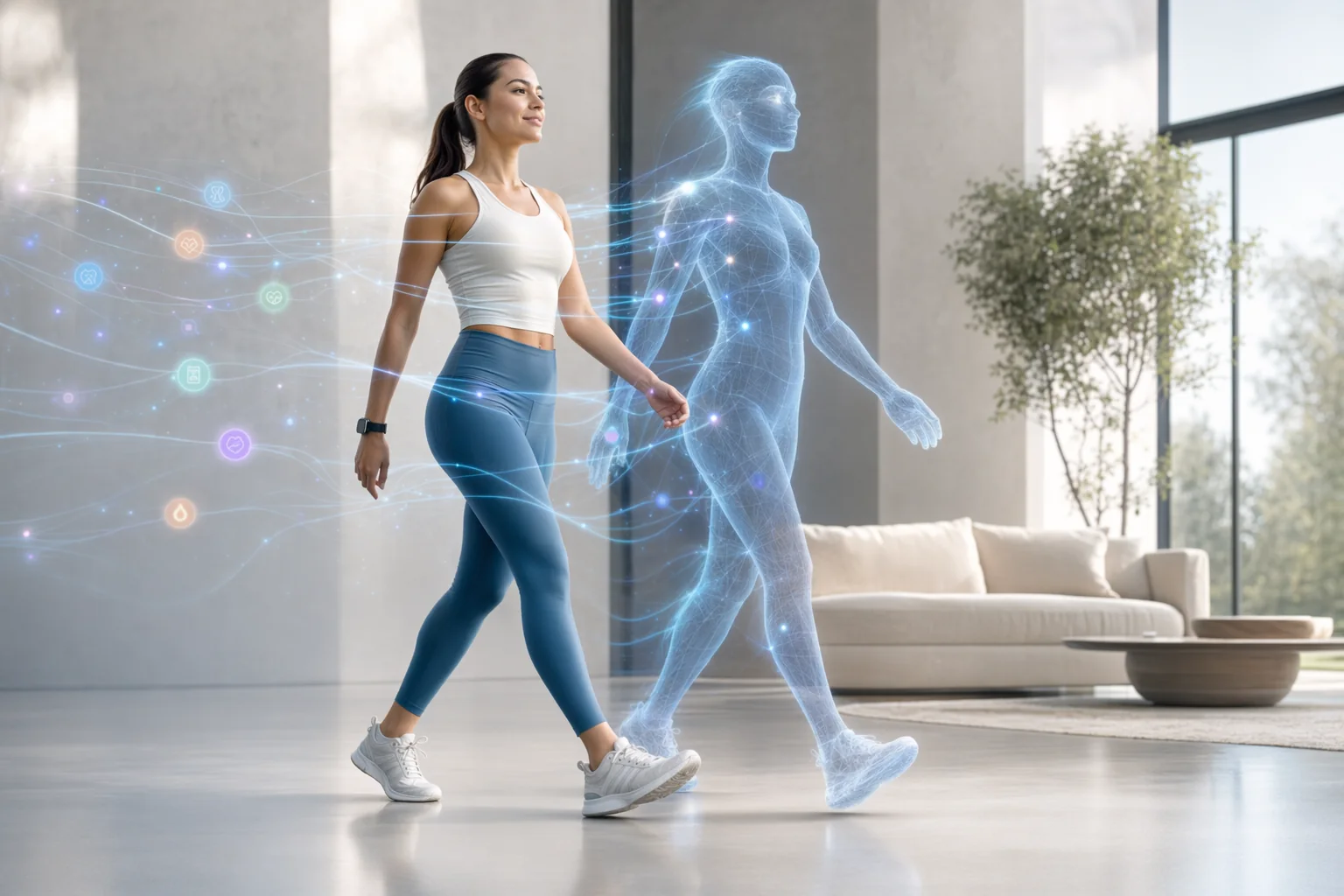
Today we observe fragments.
08
A test here, a watch there, a questionnaire somewhere else. Each source lives in its own corner, unconnected to the rest.
02
Act 2
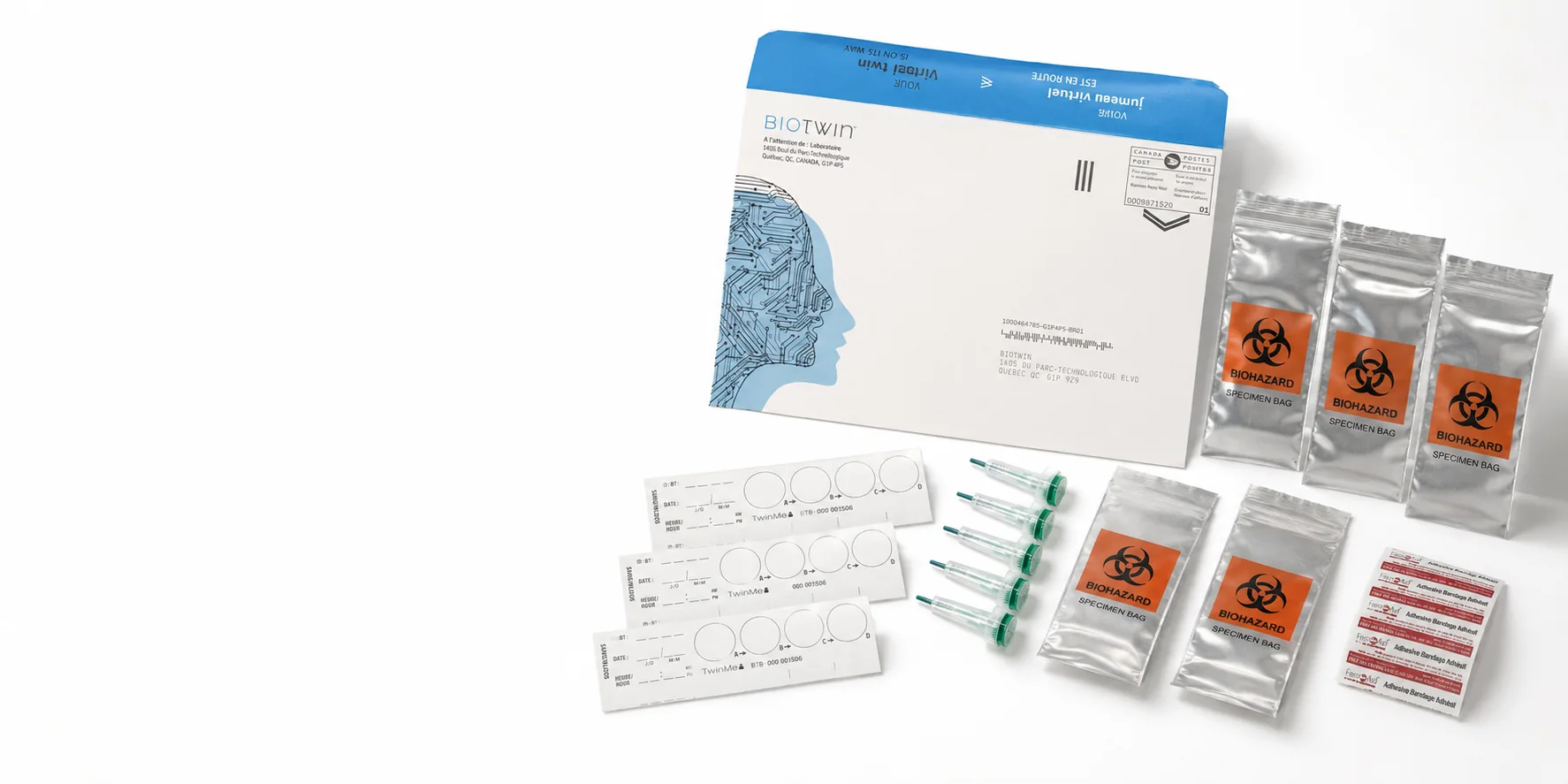
The origin of the idea.
10
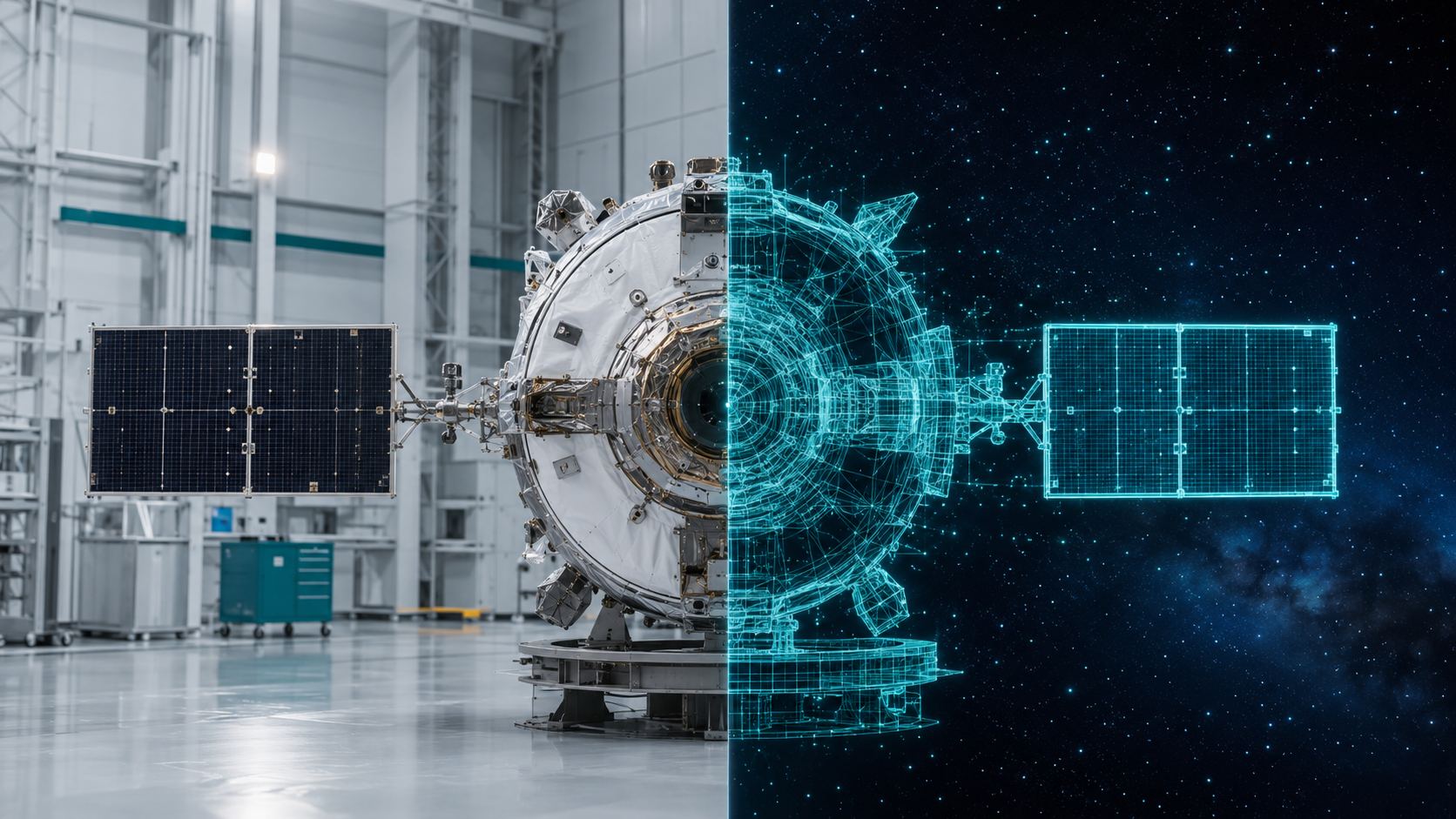
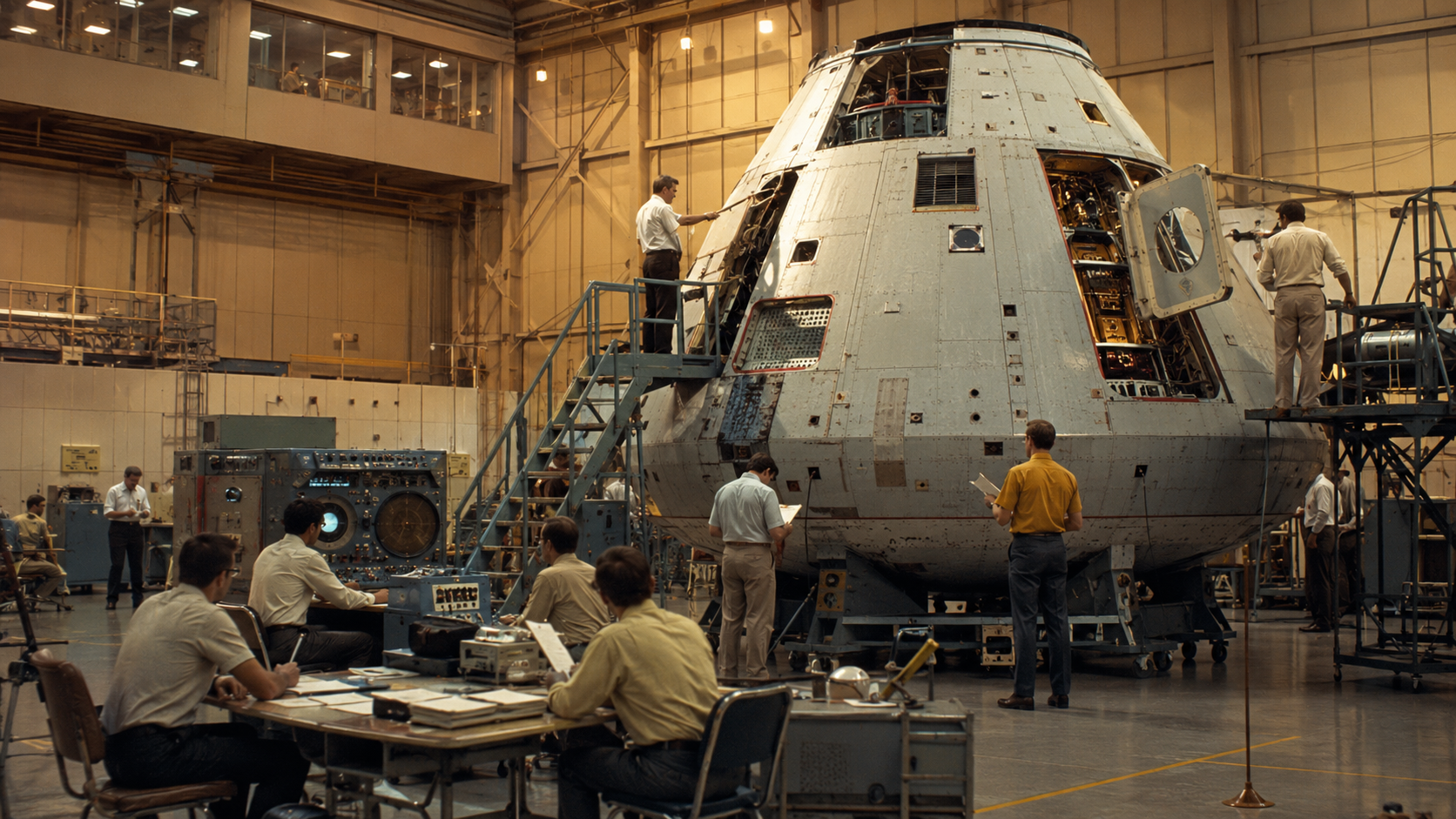
The digital twin is not a new idea. It comes from aerospace.
Act 2 · The origin
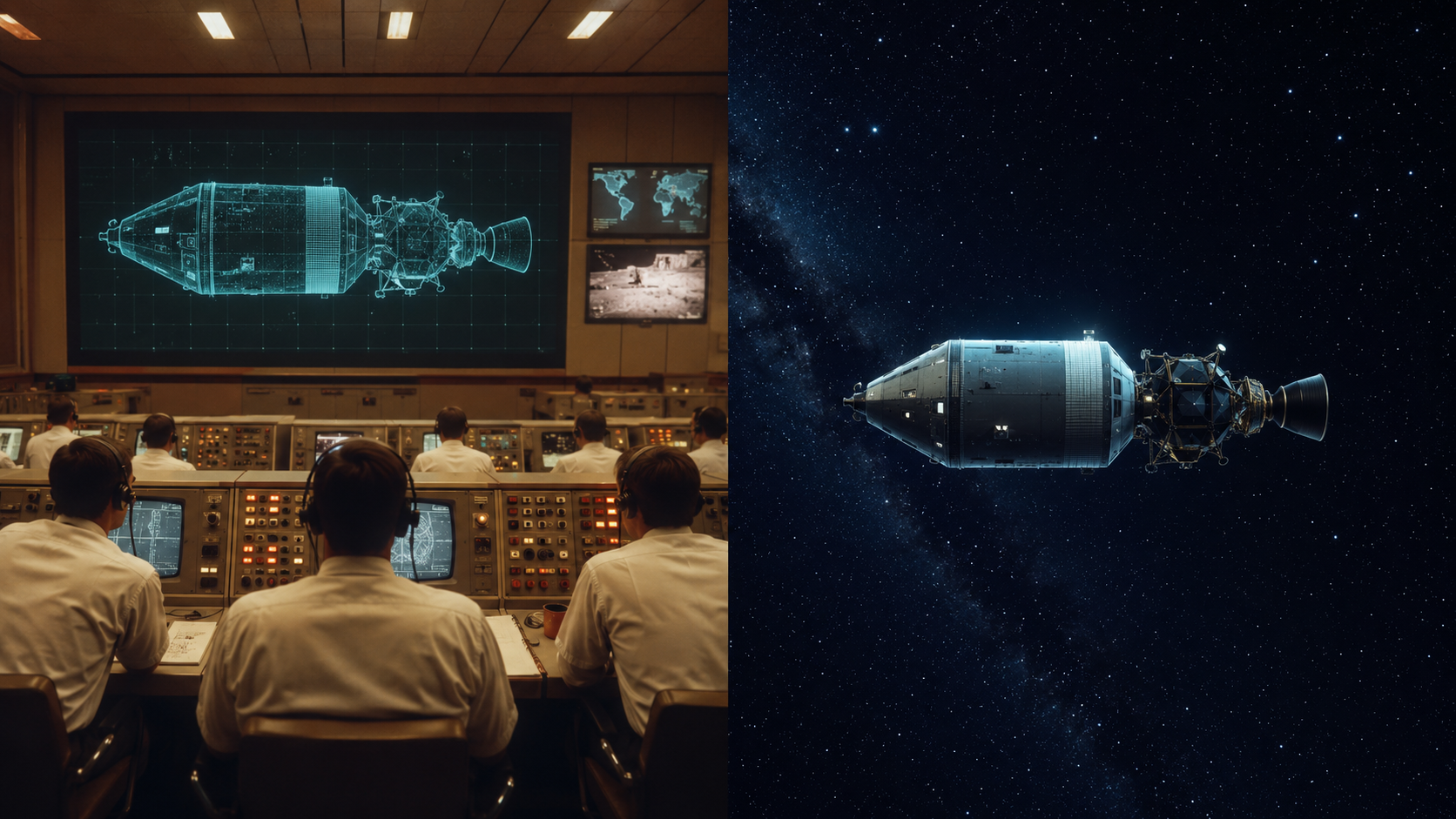
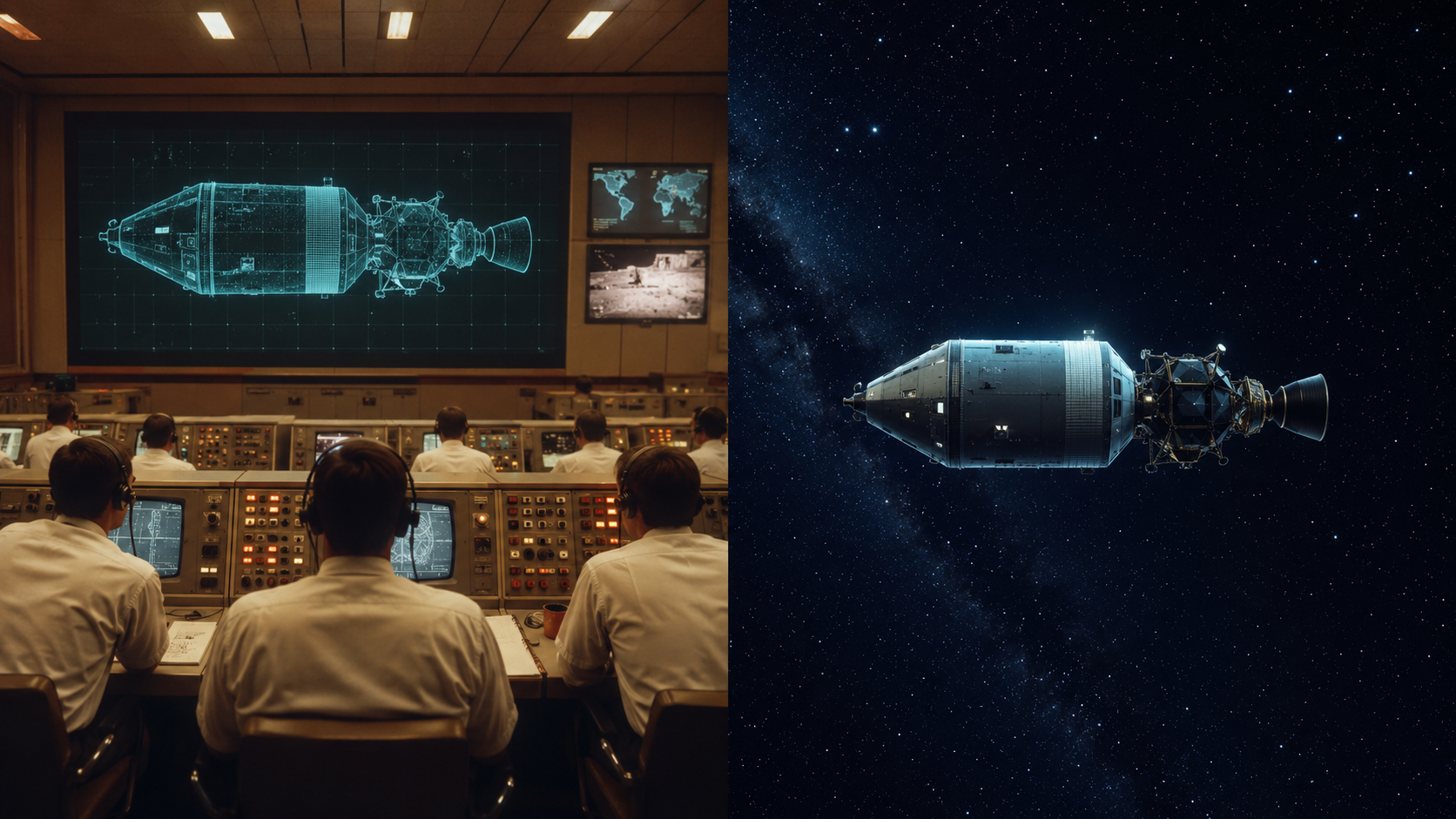
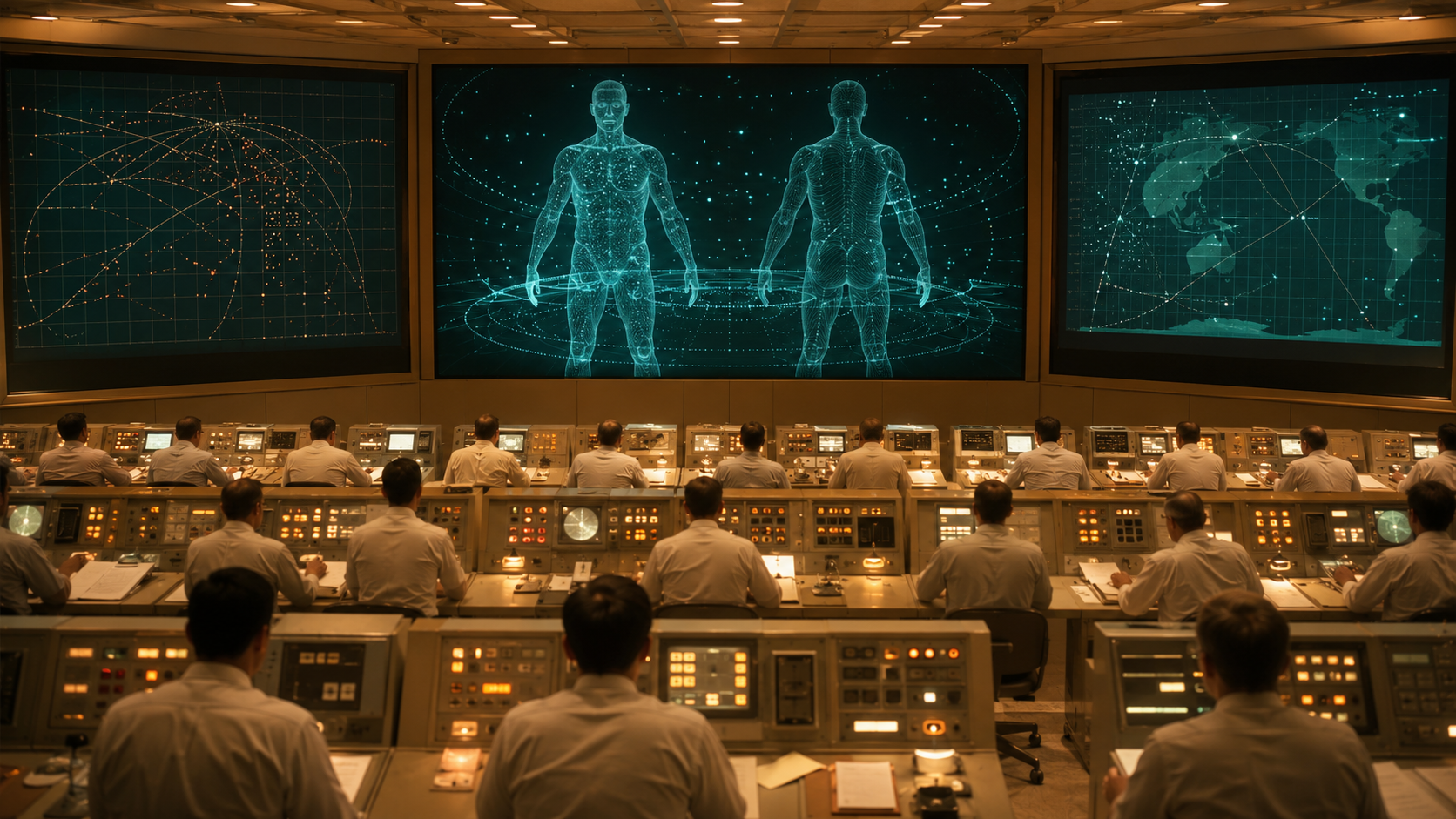
1970. Apollo 13. A problem 300,000 km away.
11
Ground control room and spacecraft in flight: the mission's two realities, side by side.
Act 2 · The origin
No way to go and look. So they replicated the problem on the ground.
12
Engineers tested the fixes on the replica assembled on the ground before passing them to the crew.
Act 2 · The origin
Test on the copy, before acting on the real thing.
13
That is the founding principle: when you cannot observe directly, you build a faithful representation and work on that.
Act 2 · The origin
It is the first example of a digital twin most often cited.
14
Apollo 13 is the most cited founding example. The term “digital twin” was formalized later, in the early 2000s.
03
Act 3
The uses today.
15
The idea spread everywhere a system is complex, costly and critical.
Act 3 · The uses
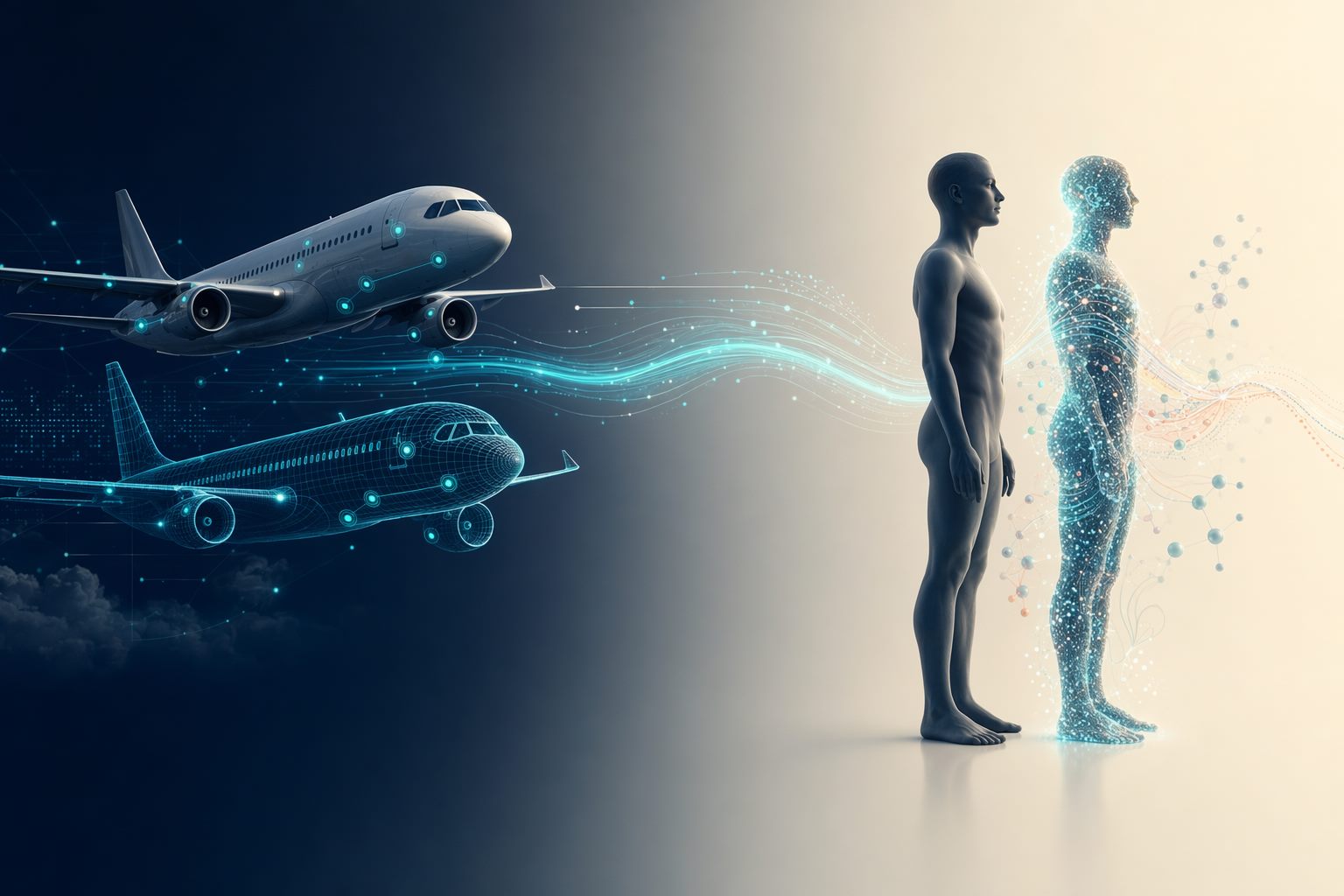
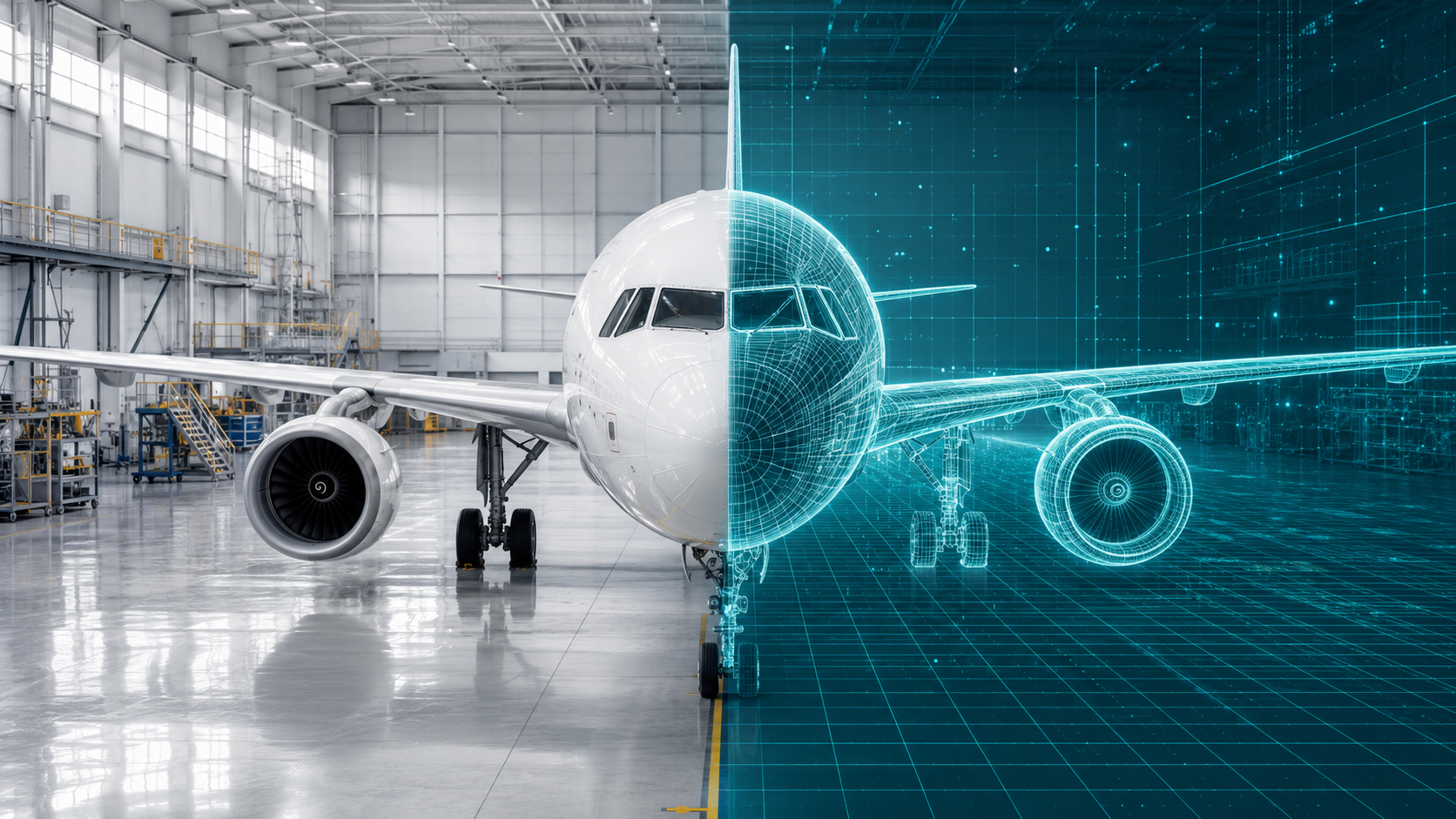
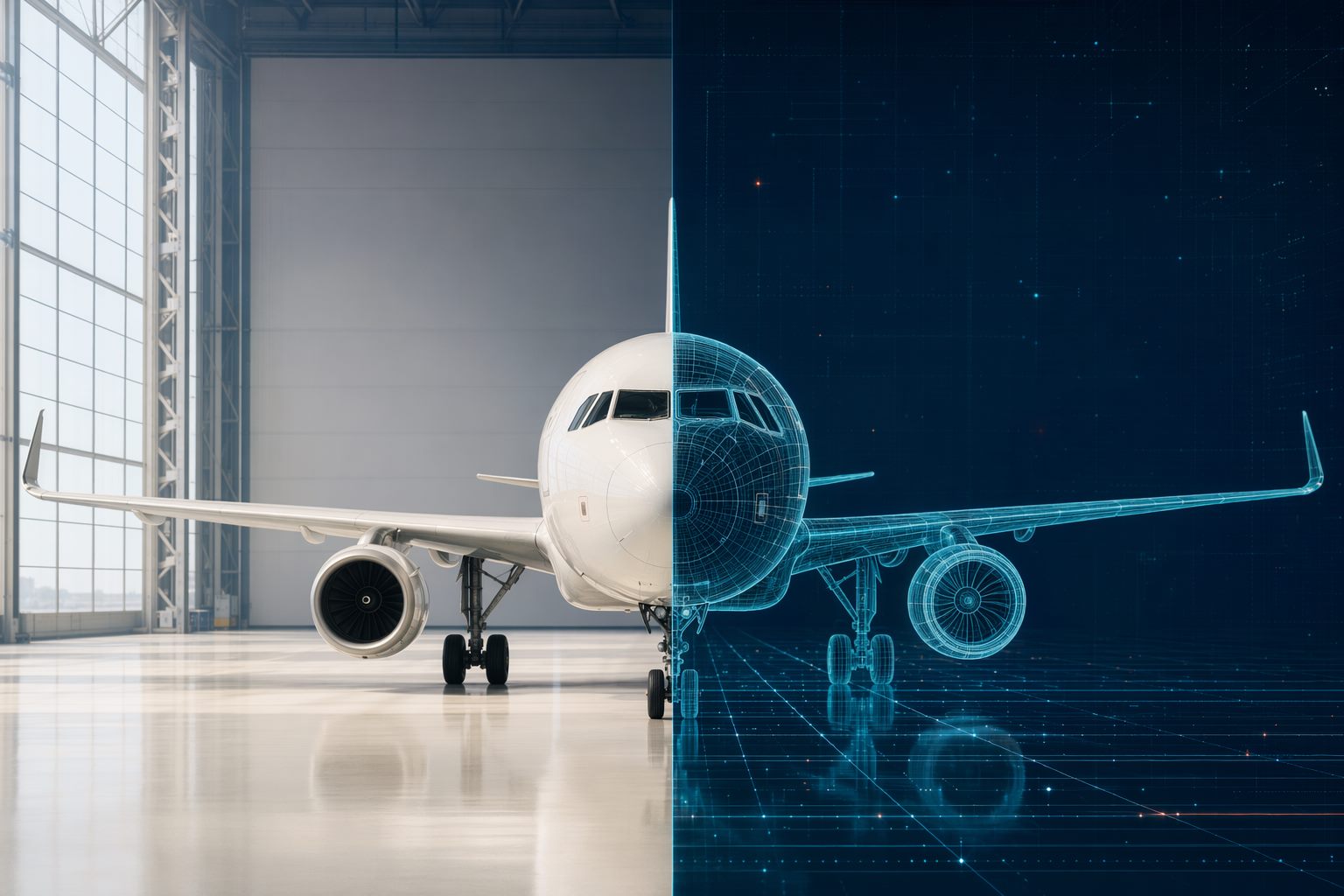
One aircraft. Two realities.
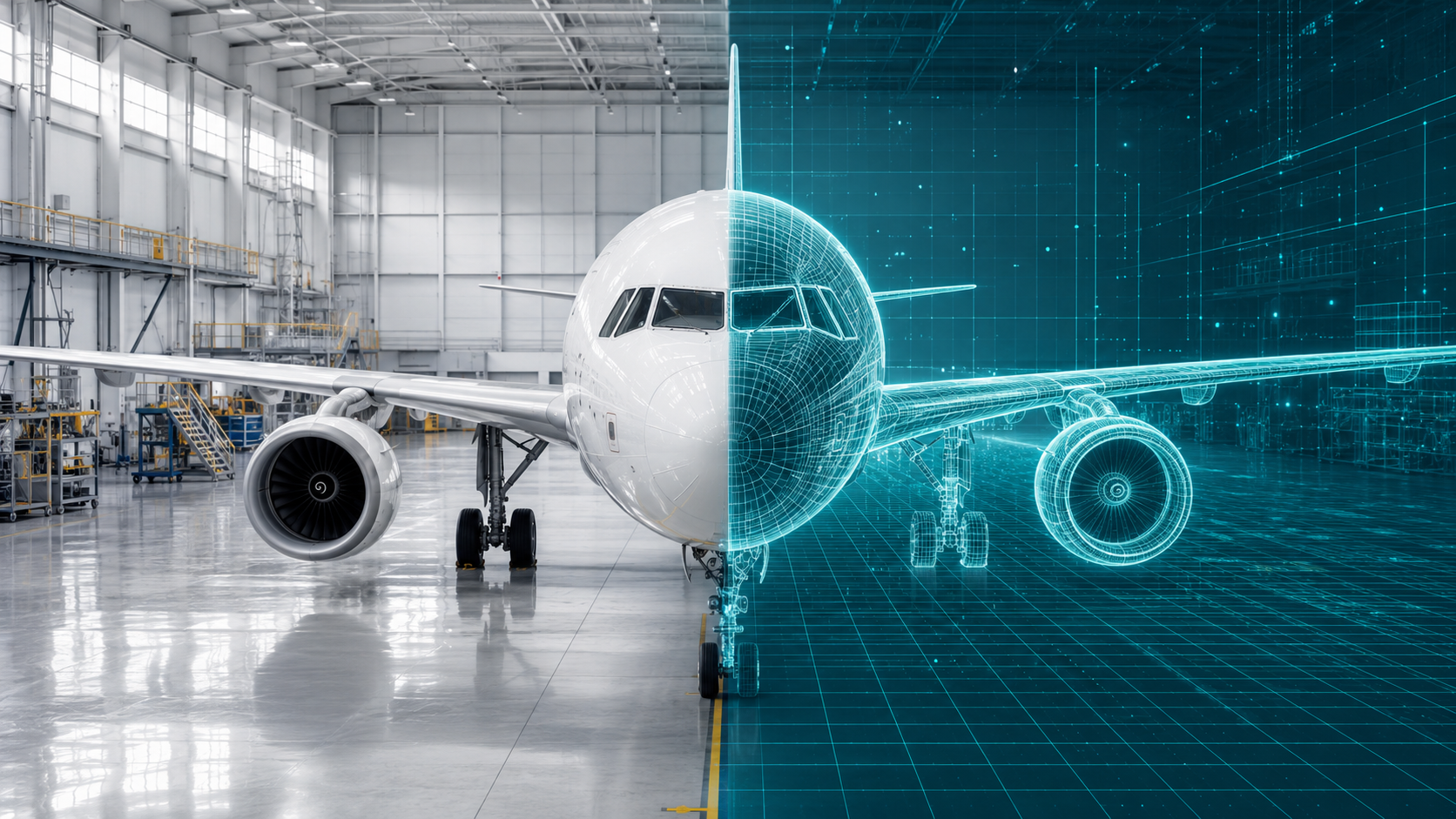
16
While an aircraft flies, its digital double is tracked on the ground and receives its data continuously.
Act 3 · The uses
No two flights are alike: weather, cargo, passengers.
17
Every flight imposes different constraints. Two aircraft of the same model therefore do not age the same way.
Act 3 · The uses
Maintenance is tailored to each aircraft, not to the average.
18
Engine makers and airlines use digital twins to track the real wear of each engine and tailor its maintenance.
Act 3 · The uses
Tracking wear before the breakdown.
19
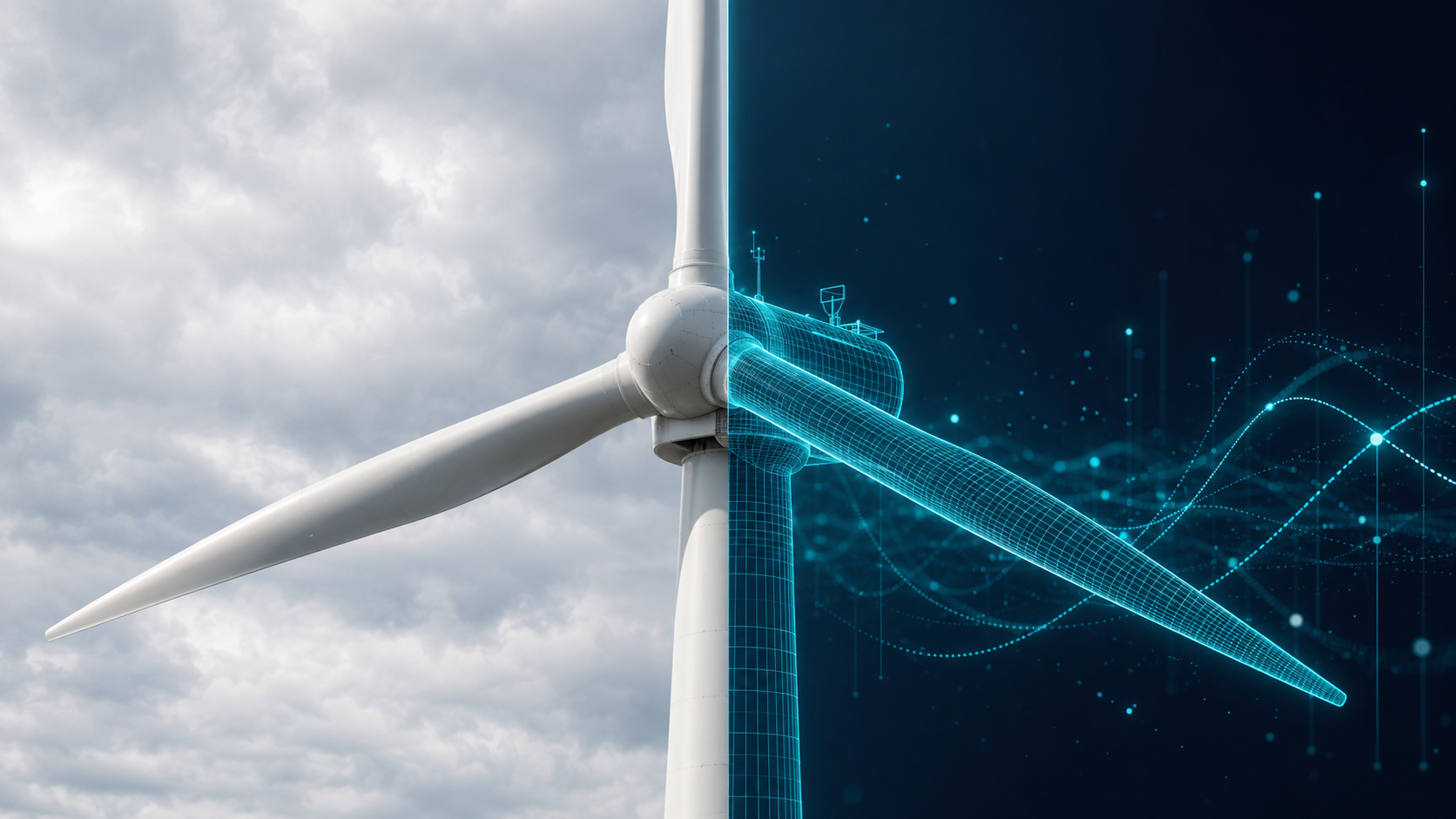
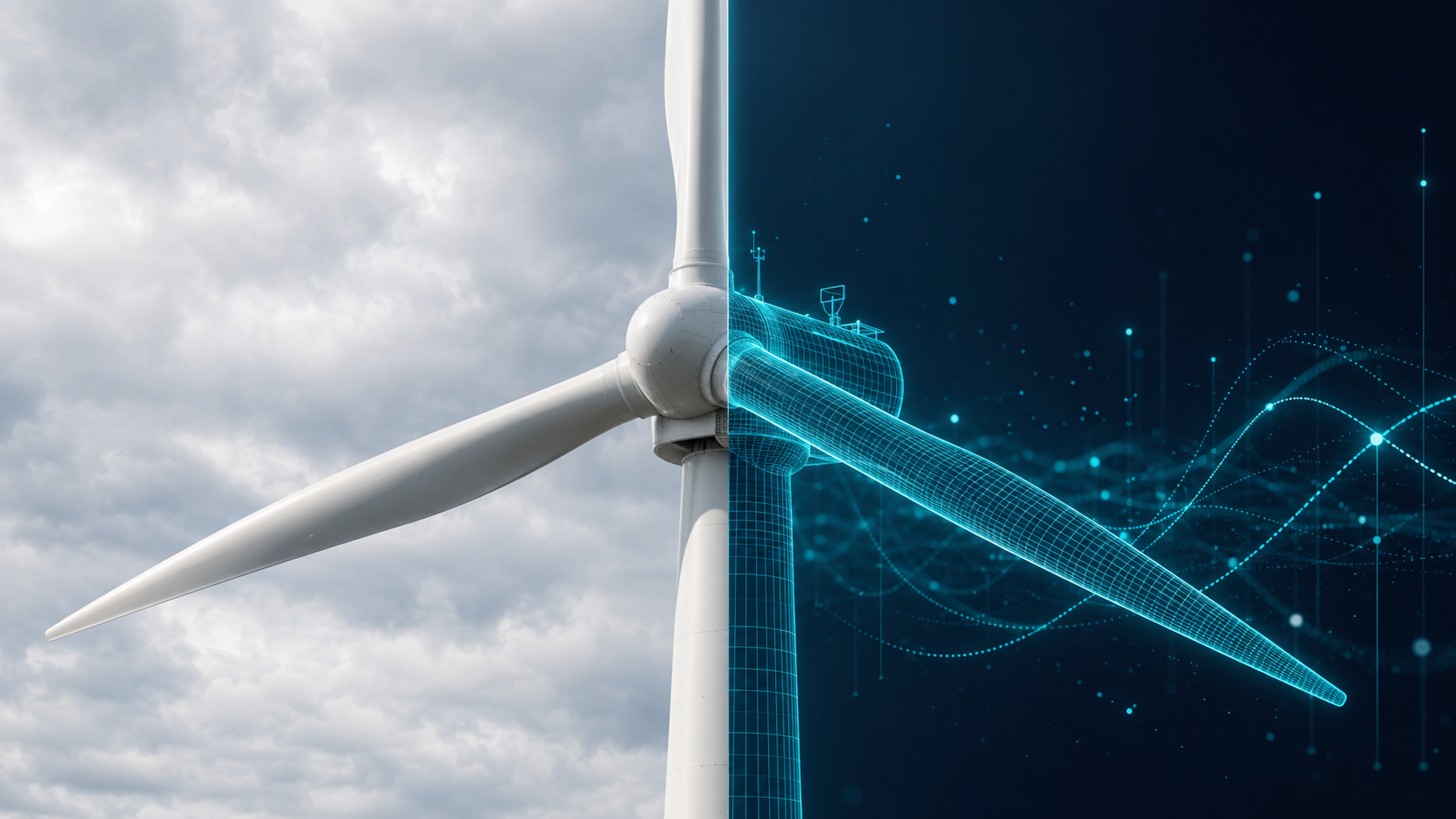
The wind turbine's digital twin tracks the real wear on each blade.
Act 3 · The uses
Tomorrow, 150 km/h winds. Keep producing, or shut down?
20
A concrete simulation example: the twin lets you compare two scenarios, maximize output or protect the machine, before deciding.
Act 3 · The uses
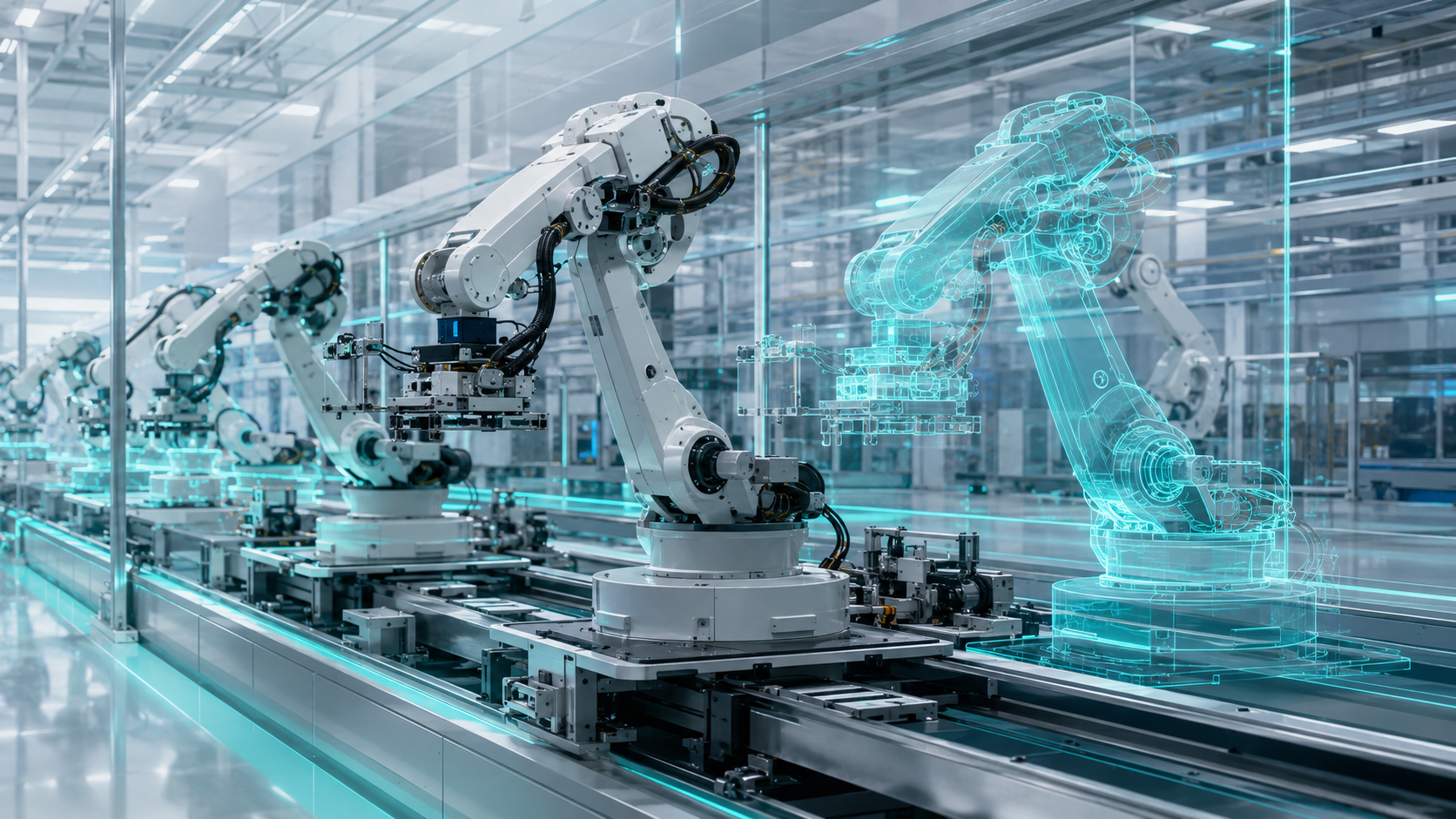
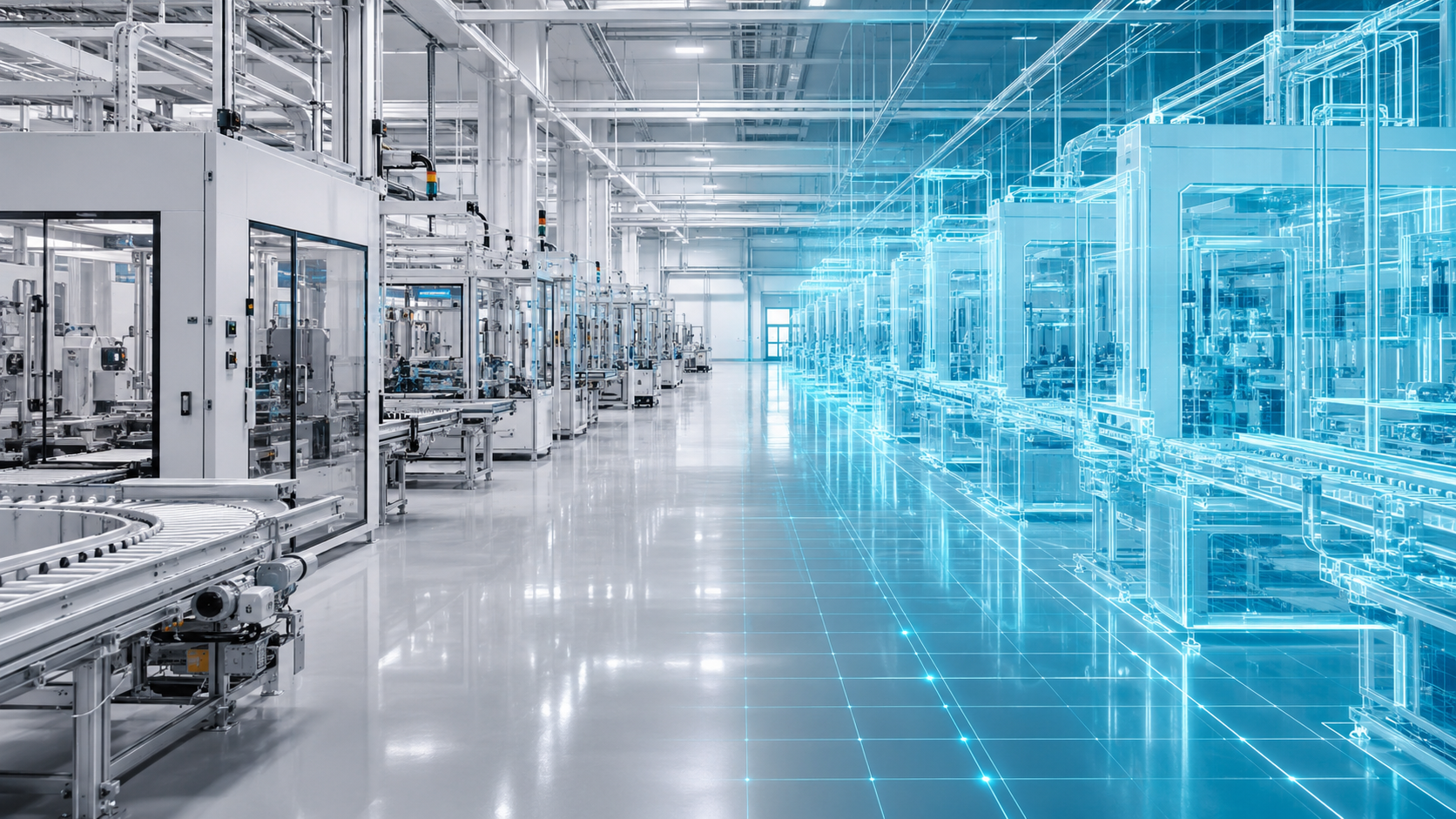
Factories, engines, grids: the same principle everywhere.
21
Factories, engines and power grids use digital twins fed by sensor data to anticipate problems and plan their interventions.
Act 3 · The uses
Always the same logic.
Observe and collect
Model
Simulate
Detect early
22
These four steps transpose directly to human biology. That is the bridge to the next act.
Act 3 · The uses
What if the complex system were you?
23
The hinge of the walkthrough: we move from the machine to the human.
04
Act 4
Your virtual twin.
24
What the human virtual twin is, and what it is not.
Act 4 · Your twin
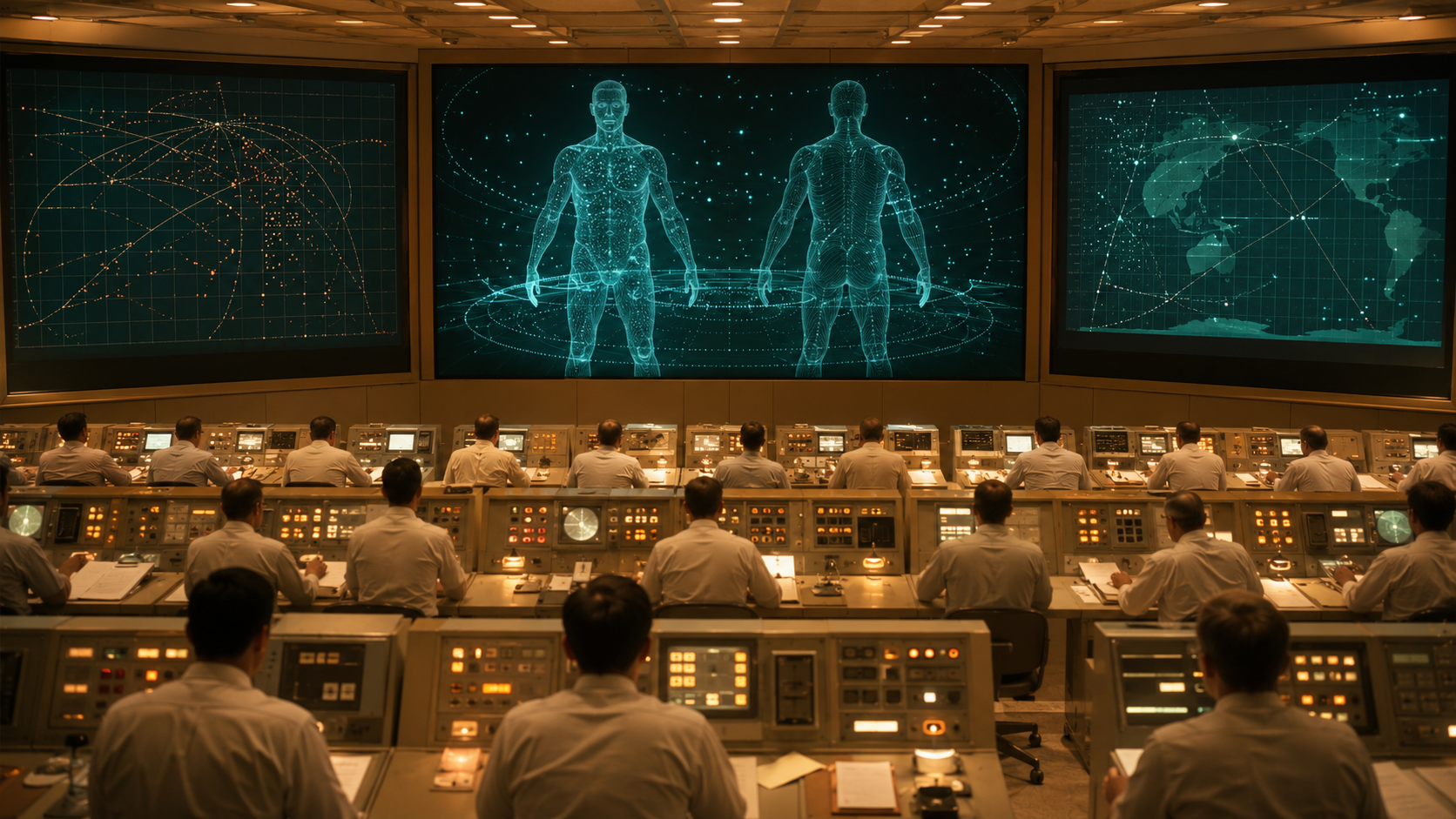
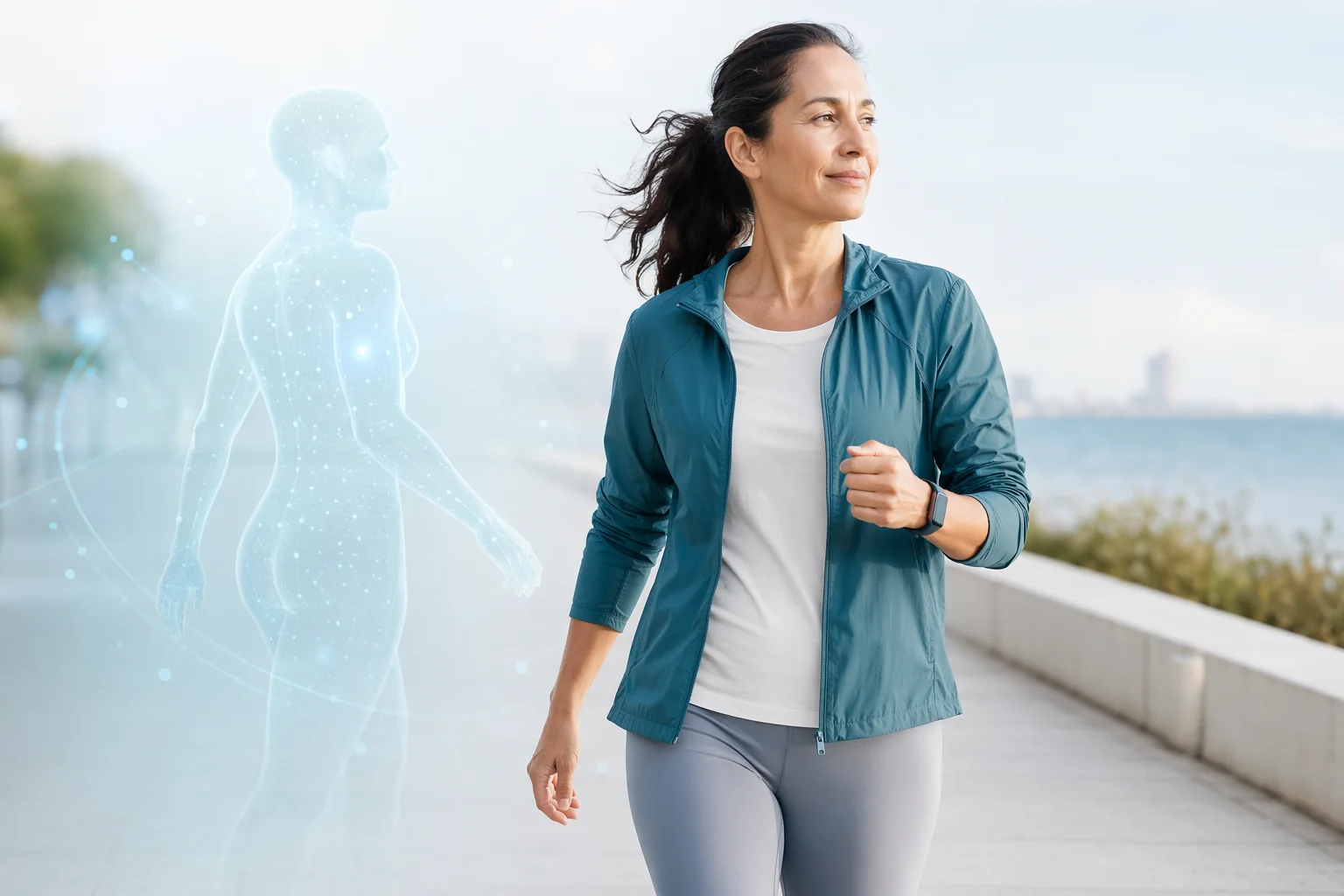
A living map of your biology.
25
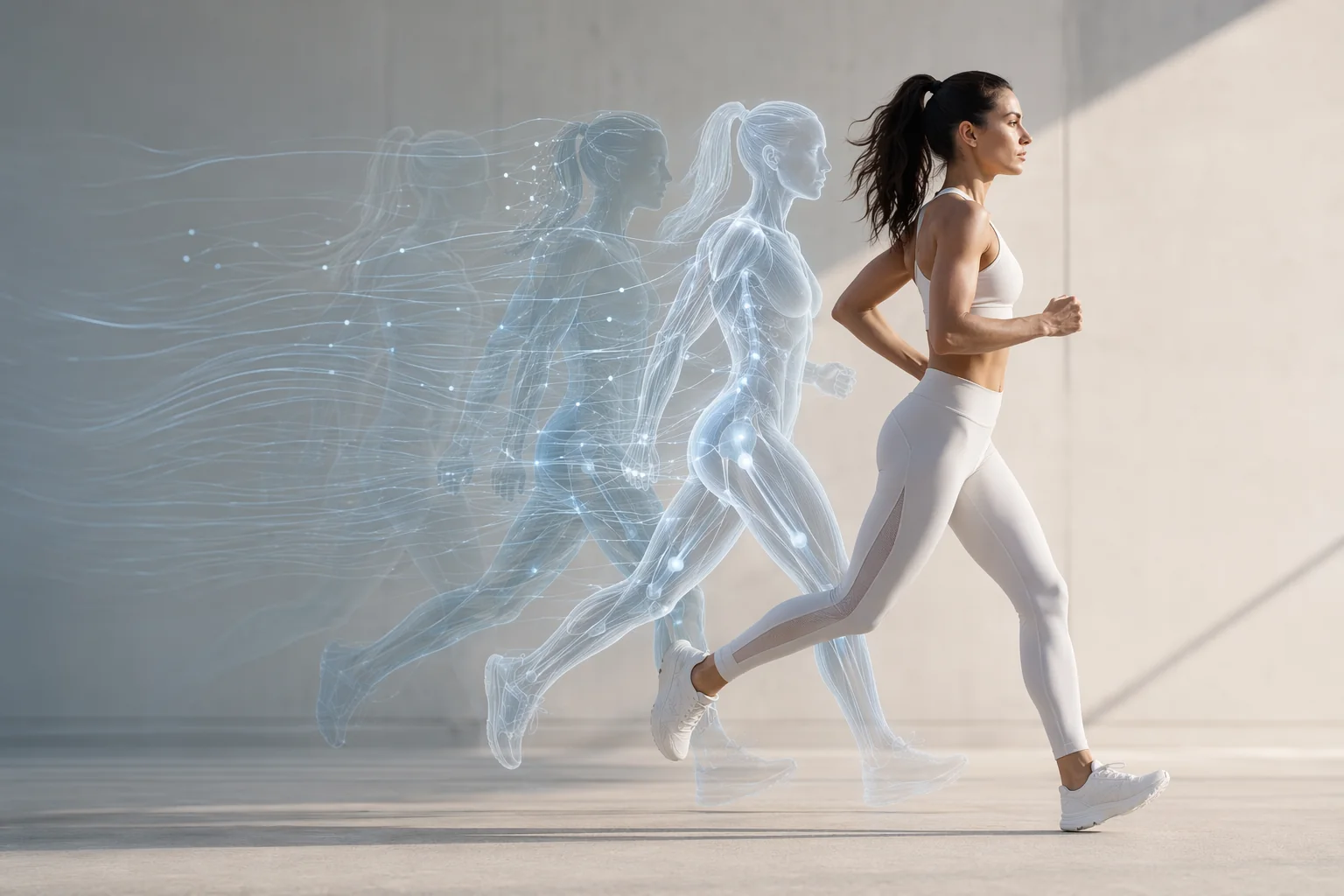
A map that sharpens as the data comes in.
Act 4 · Your twin
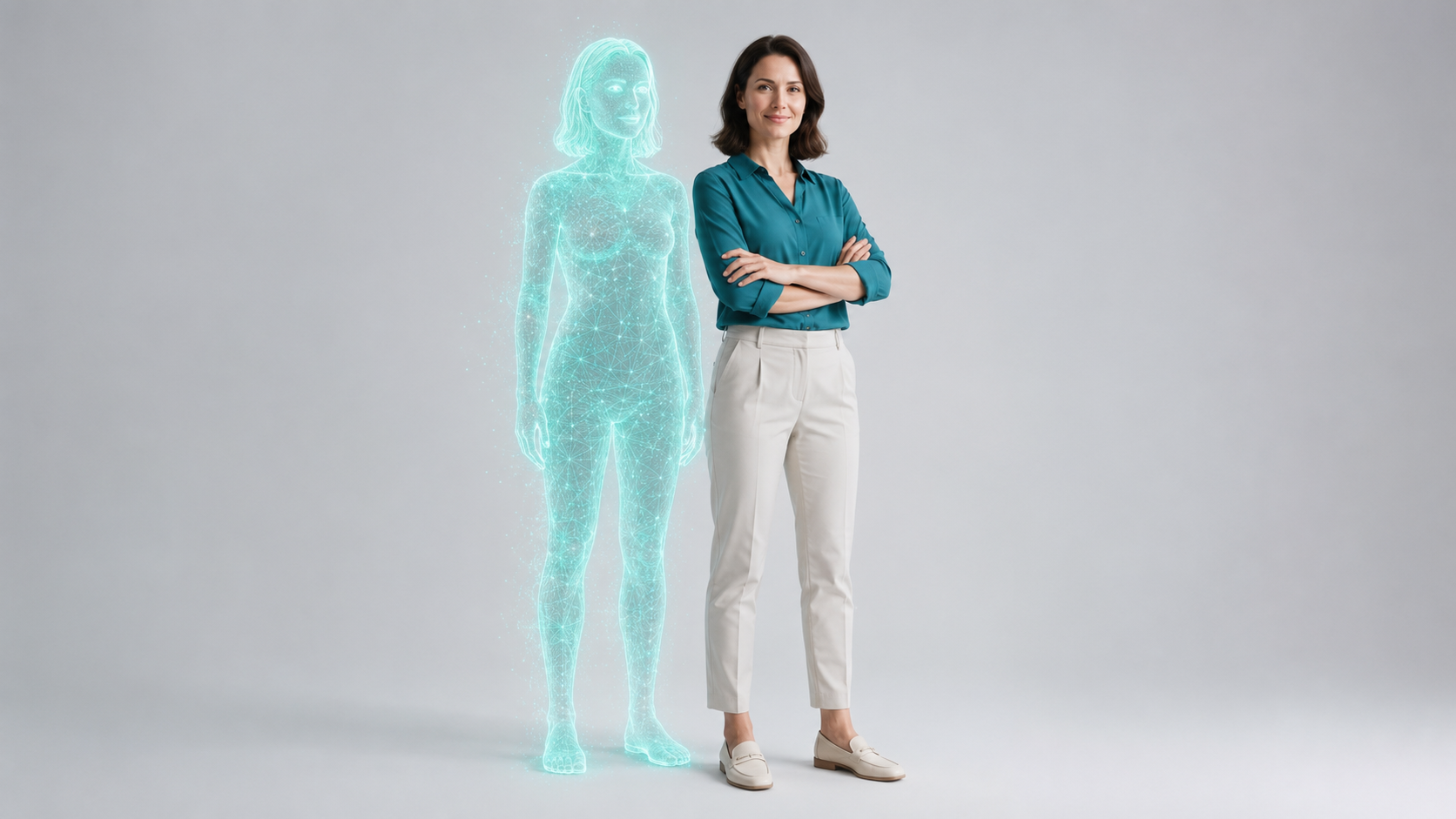
A virtual representation. 26
The twin does not copy the person. It represents what their data makes it possible to understand.
Act 4 · Your twin
A model that keeps learning.
27
Unlike a report, a twin does not end: it updates.
Act 4 · Your twin
Your reference is you.
28
The population gives a reference point. Your own history gives your context. That answers the need for personalization raised in act 1.
05
Act 5
What it is made of.
29
Everything that can feed the twin, apart from BioTwin's own biology, which is the subject of the next act.
Act 5 · What it is made of
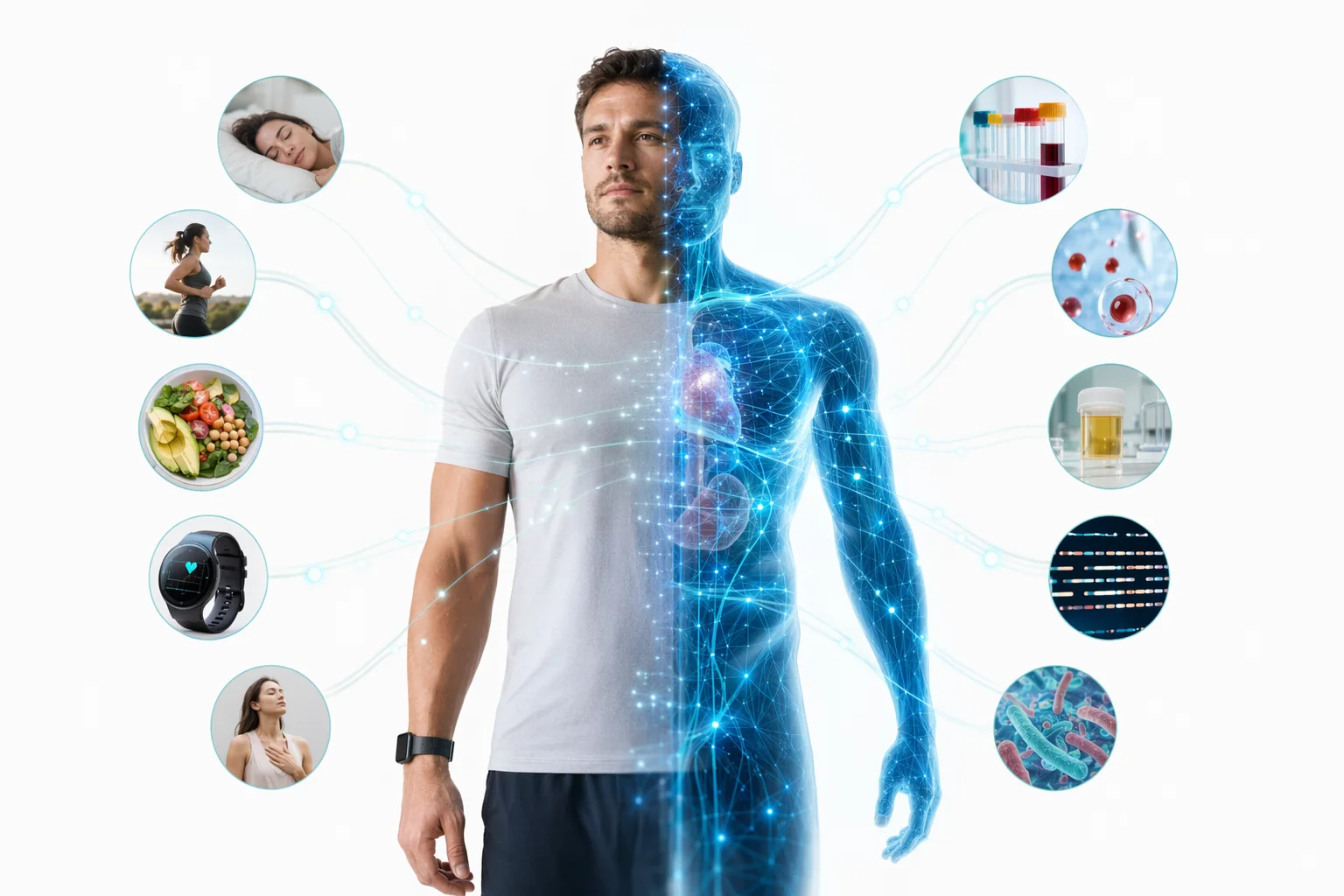
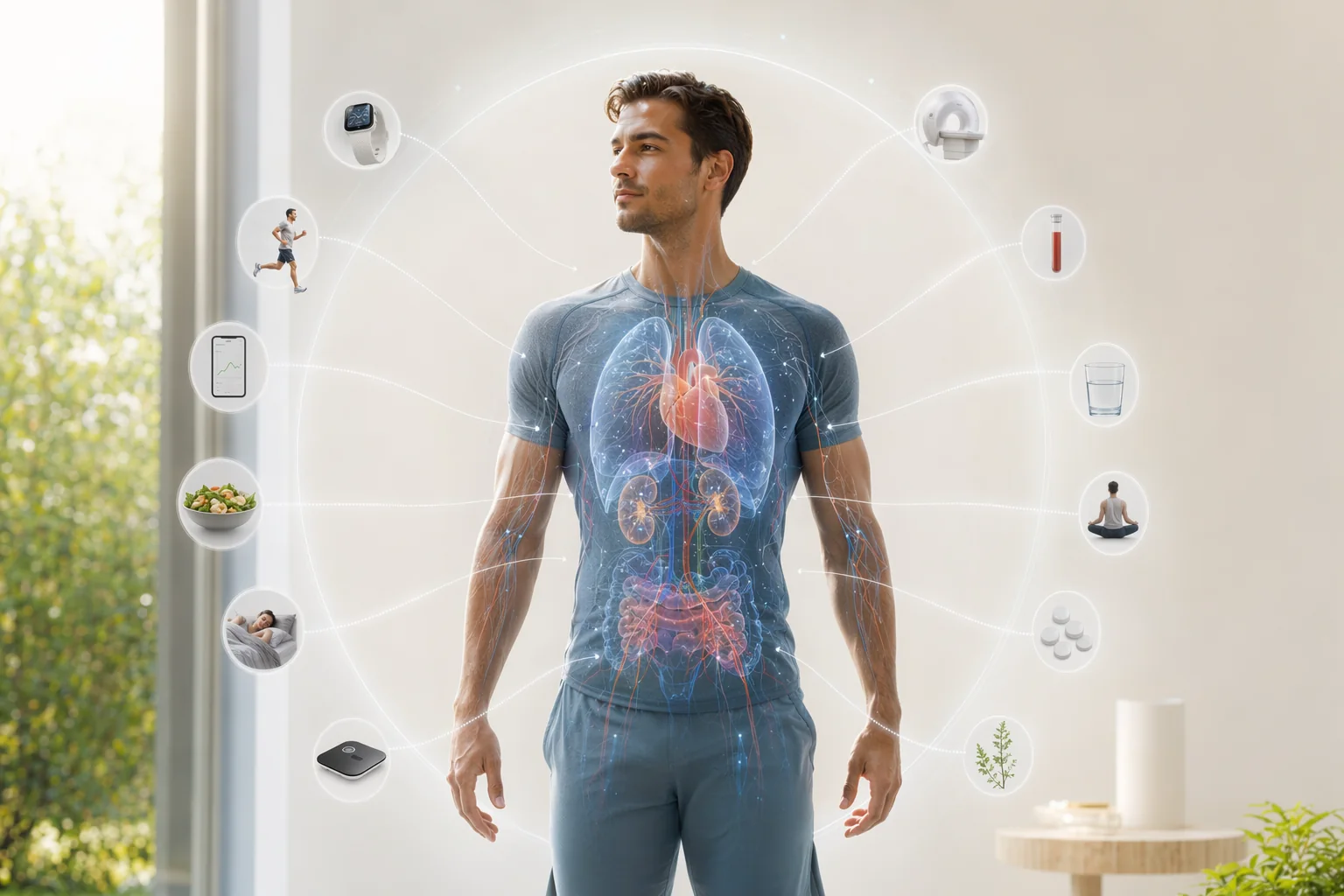
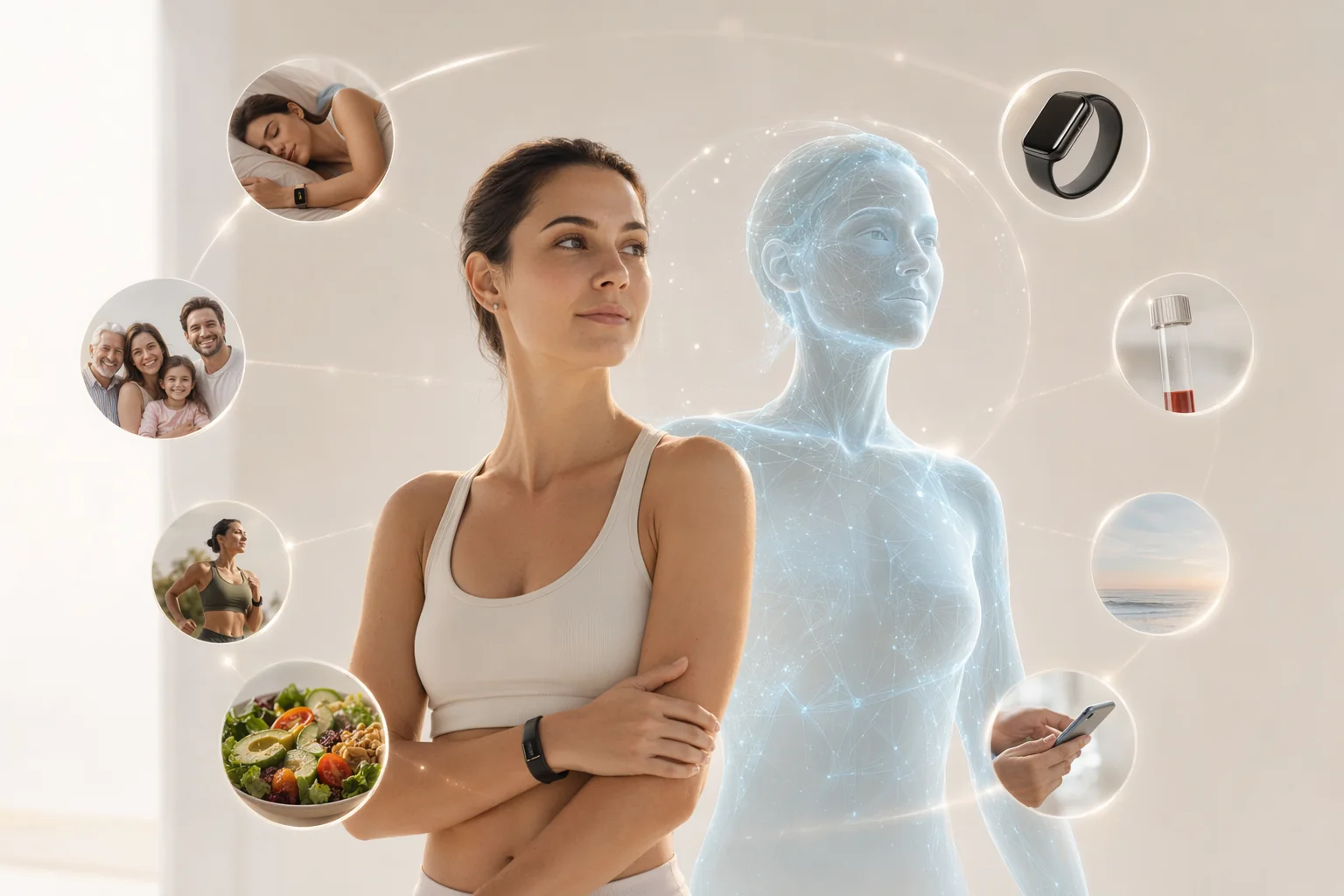
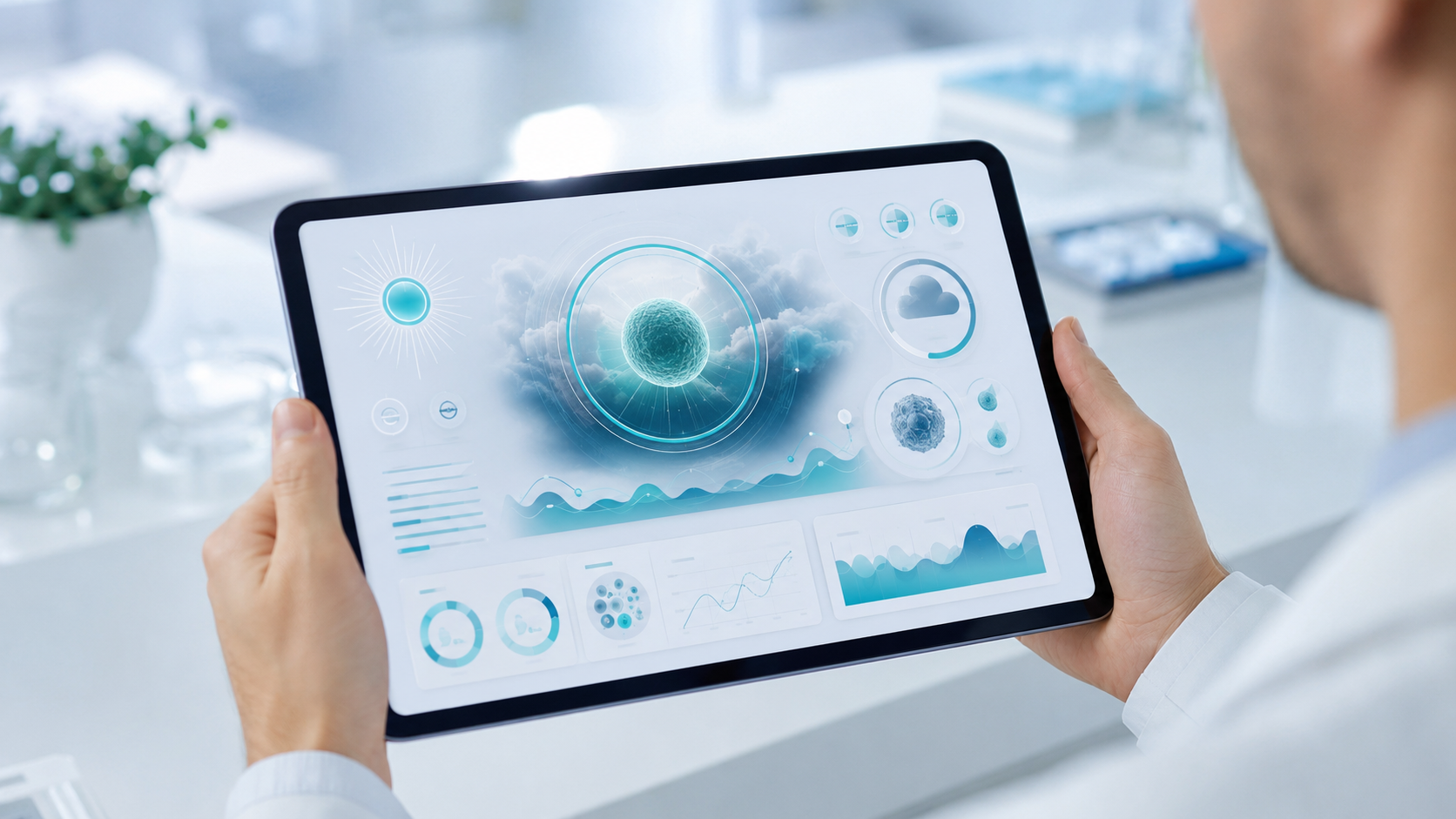
Real data, finally connected.
30
All the sources that can feed the twin, brought together in one view.
Act 5 · What it is made of
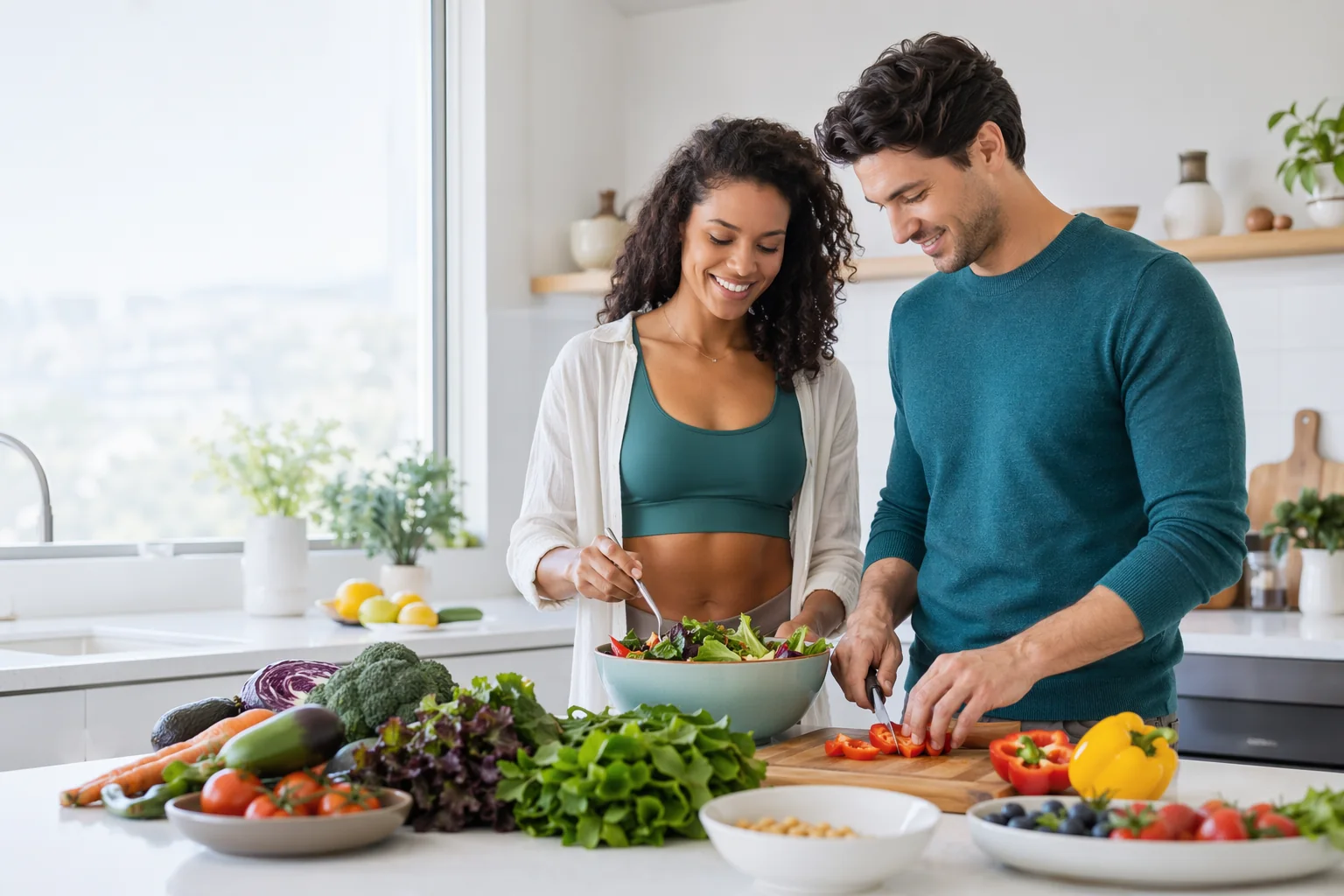
Sleep, movement, nutrition, habits.
31
Life context gives meaning to biological signals.
Act 5 · What it is made of
Your connected devicesfinally start to mean something.
32
On their own, this data stays a set of curves. Connected to the rest, it becomes context.
Act 5 · What it is made of
The more data it receives, the more complete your twin becomes.
33
The quality of the twin depends directly on the richness and depth of the data it receives.
Act 5 · What it is made of
And the more complete it is, the finer its reading.
34
Logical sequence: data, completeness, quality of reading. Stay careful: we are talking about readings and trends, not certain prediction.
06
Act 6
Virtualizing your biology.
35
The heart of the technology: how BioTwin virtualizes your biology itself.
Act 6 · Your biology
Photos, questionnaires, records: useful, but external.
36
All of this describes context. None of it directly measures what is happening inside.
Act 6 · Your biology
BioTwin has its own method to virtualize your biology.
37
That is what sets BioTwin apart from a platform that would simply aggregate existing data.
Act 6 · Your biology
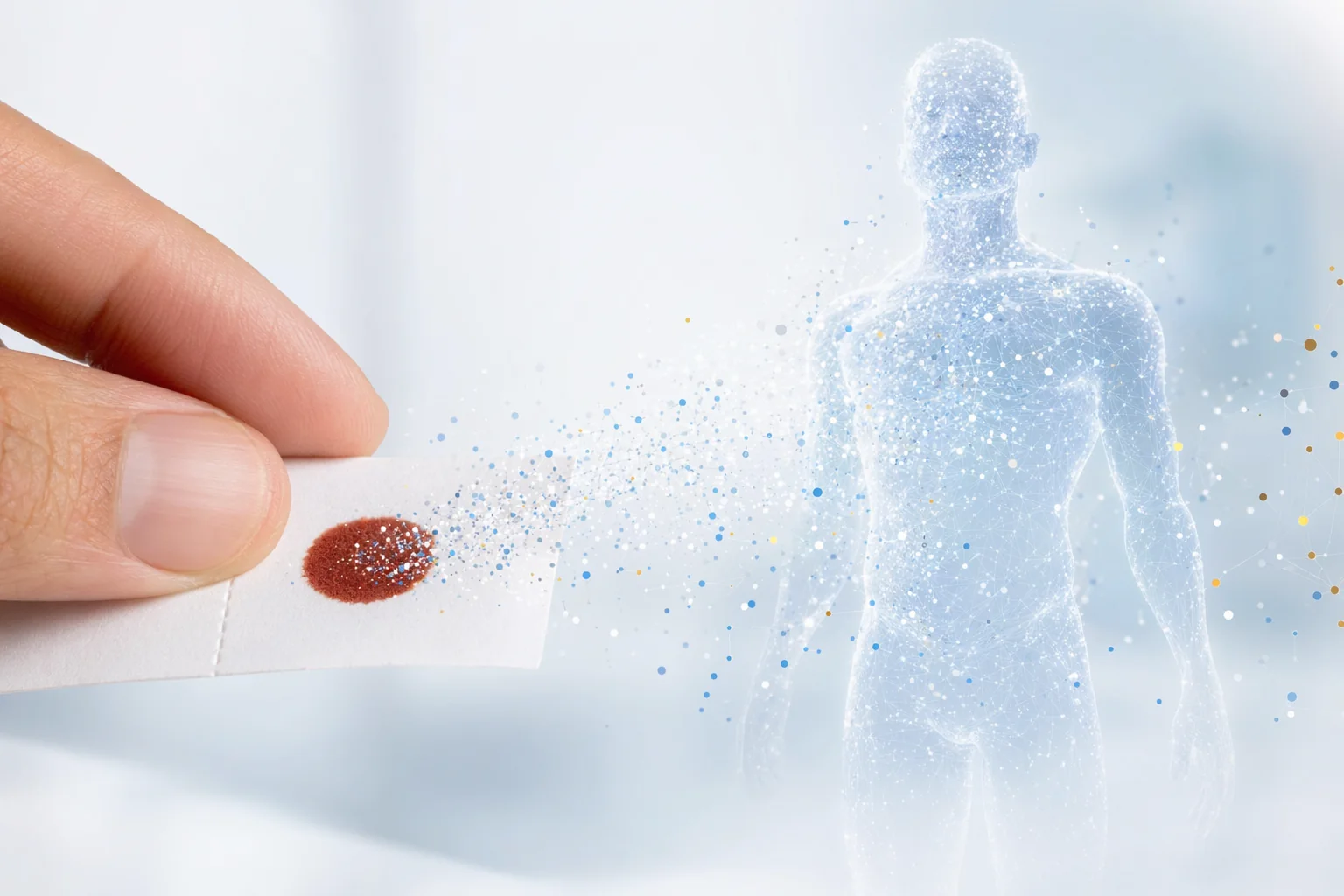
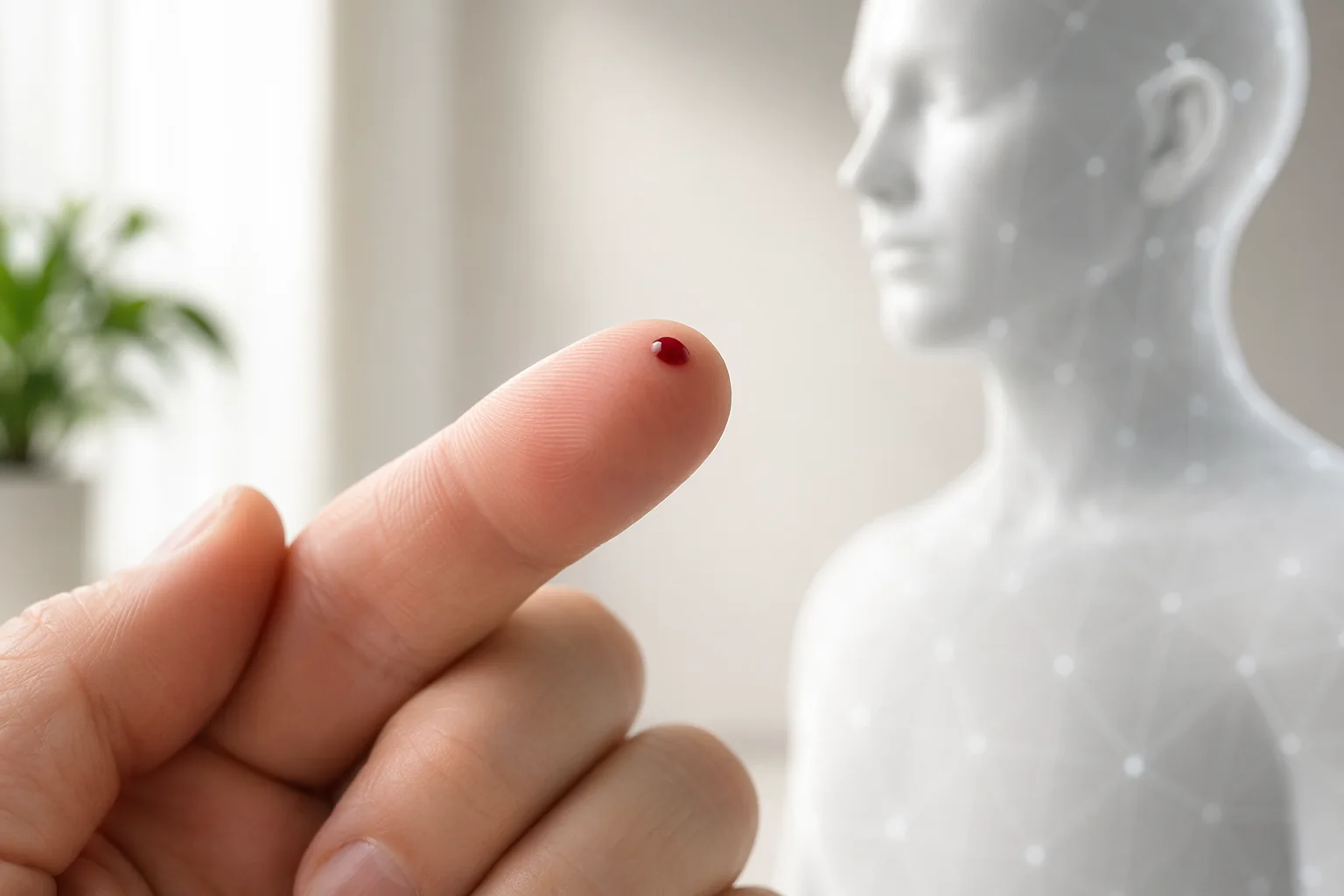
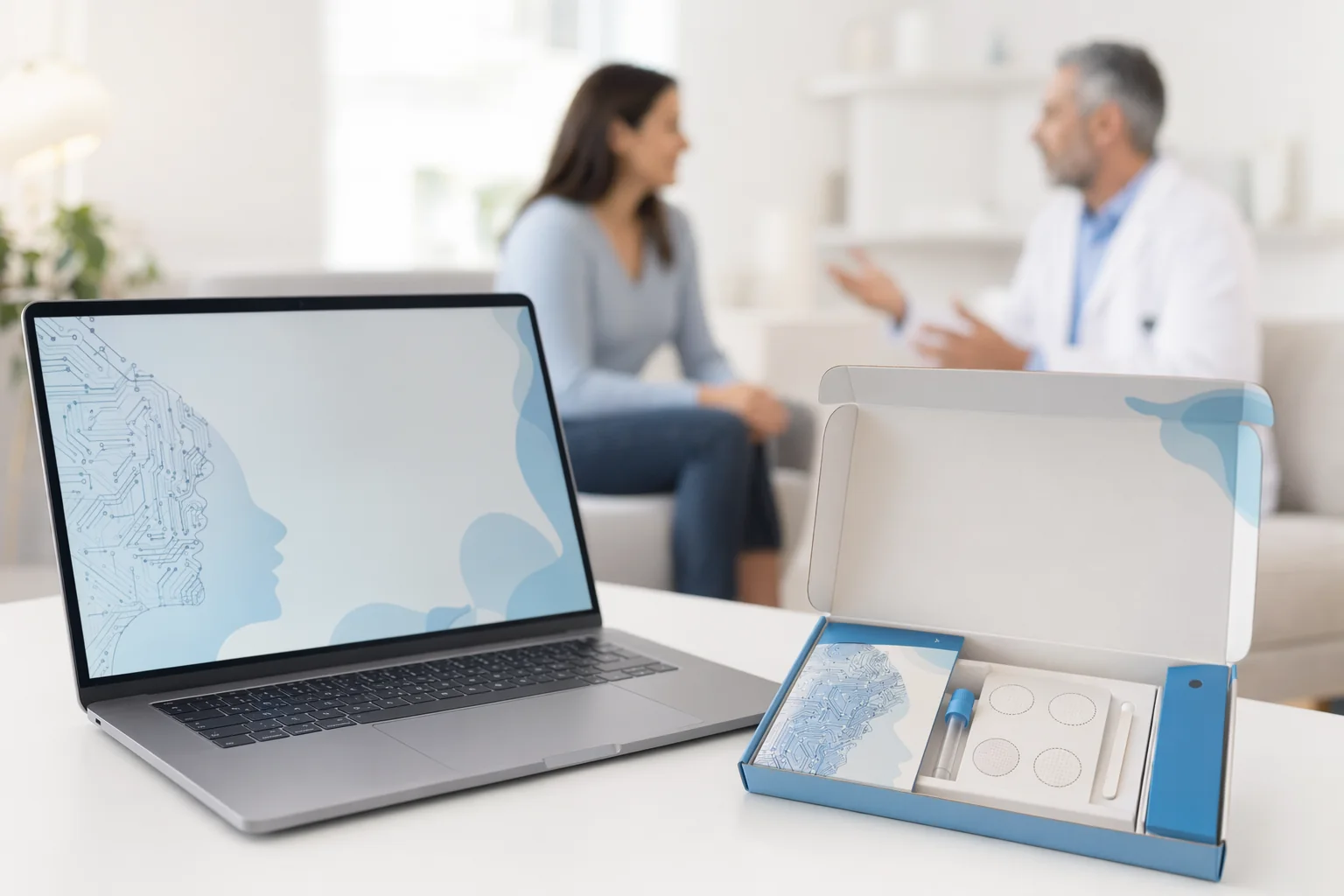
One drop opens the door.
38
The sample is collected at home, simply, with no prescription and no nurse.
Act 6 · Your biology
The layer closest to what you live, and so the first warning signal.
41
Without going into the detail of the different omics: metabolomics is recognized as the closest to the phenotype, and therefore to the state the body actually expresses.
Act 6 · Your biology
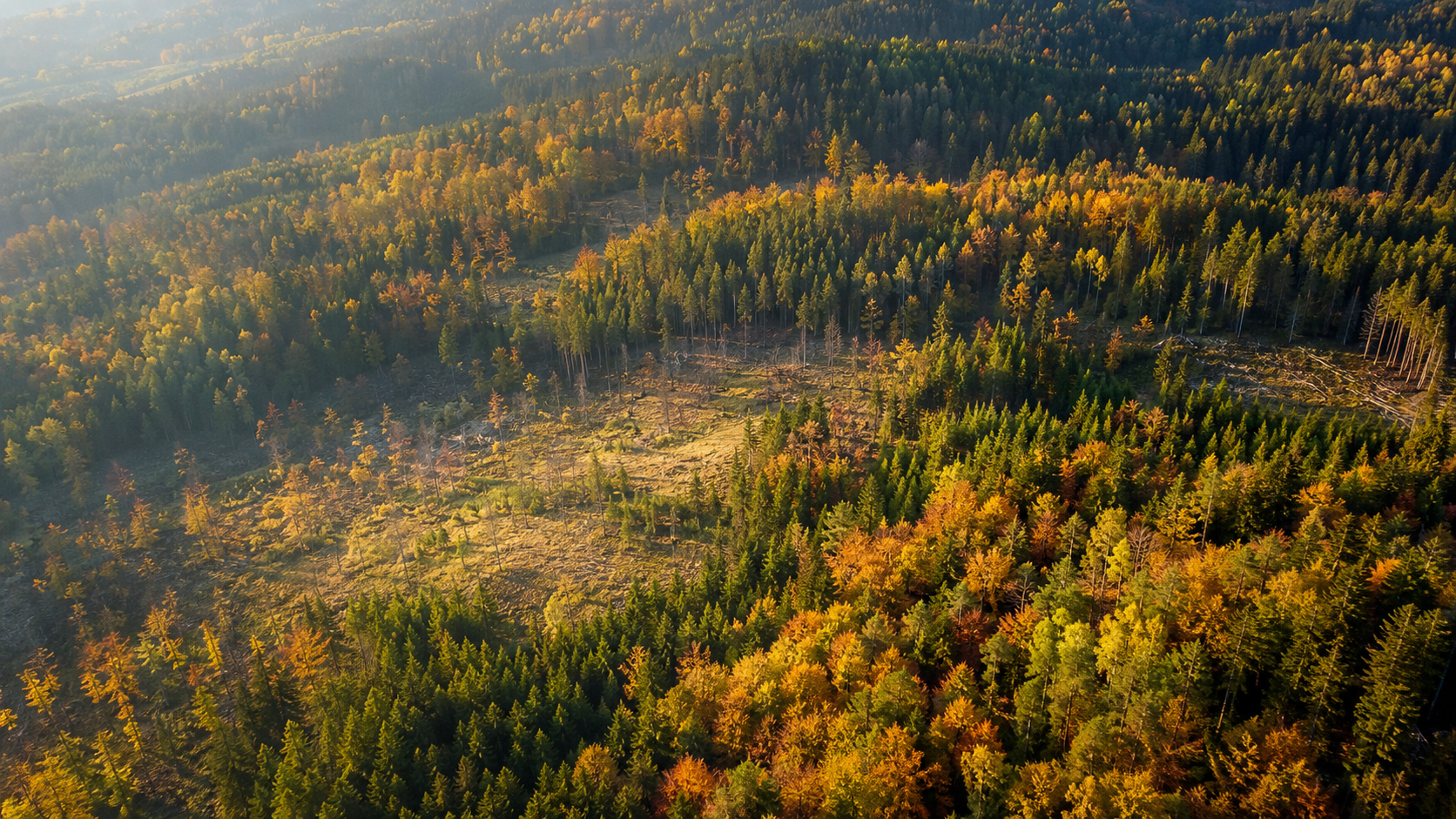
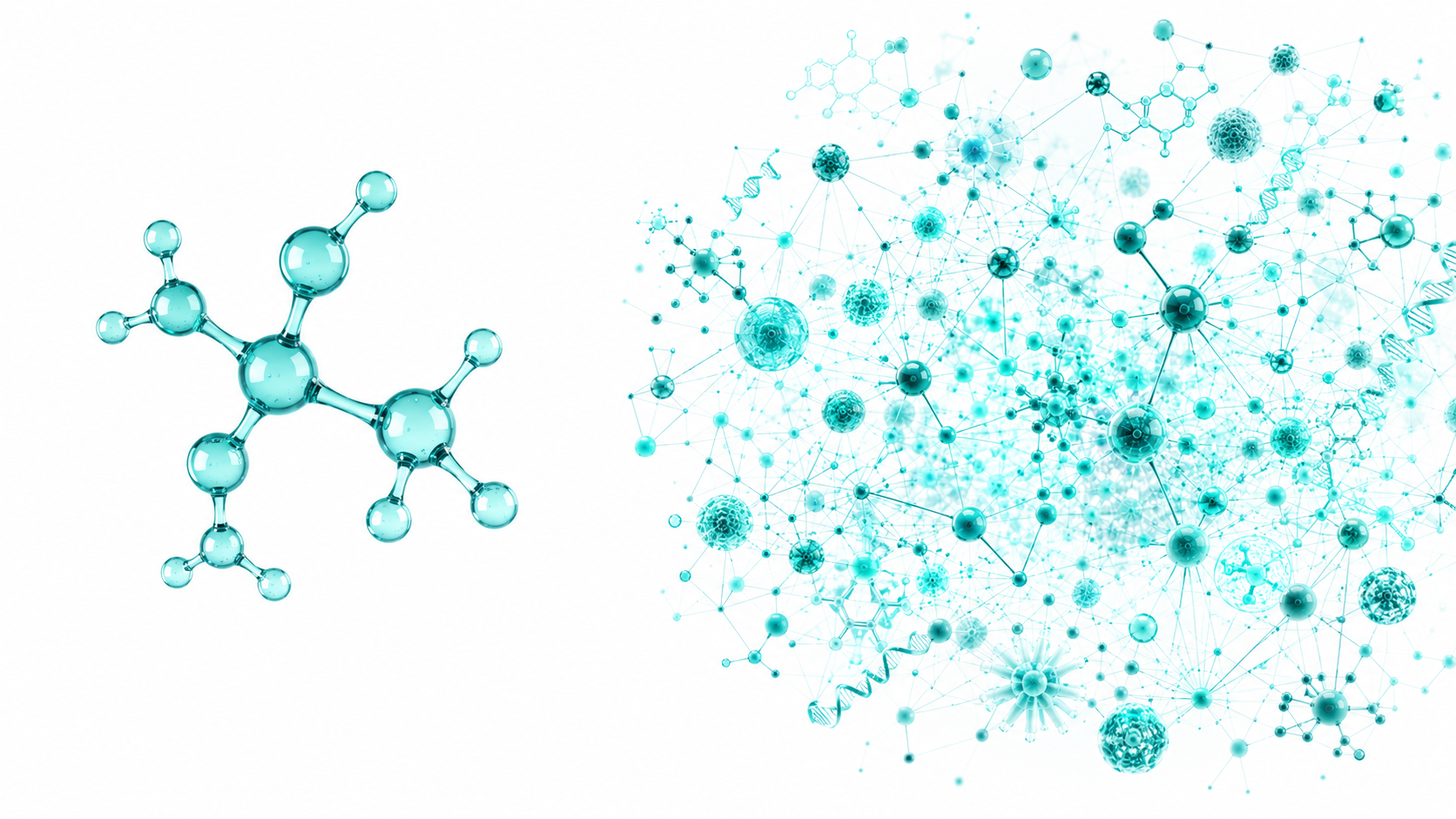
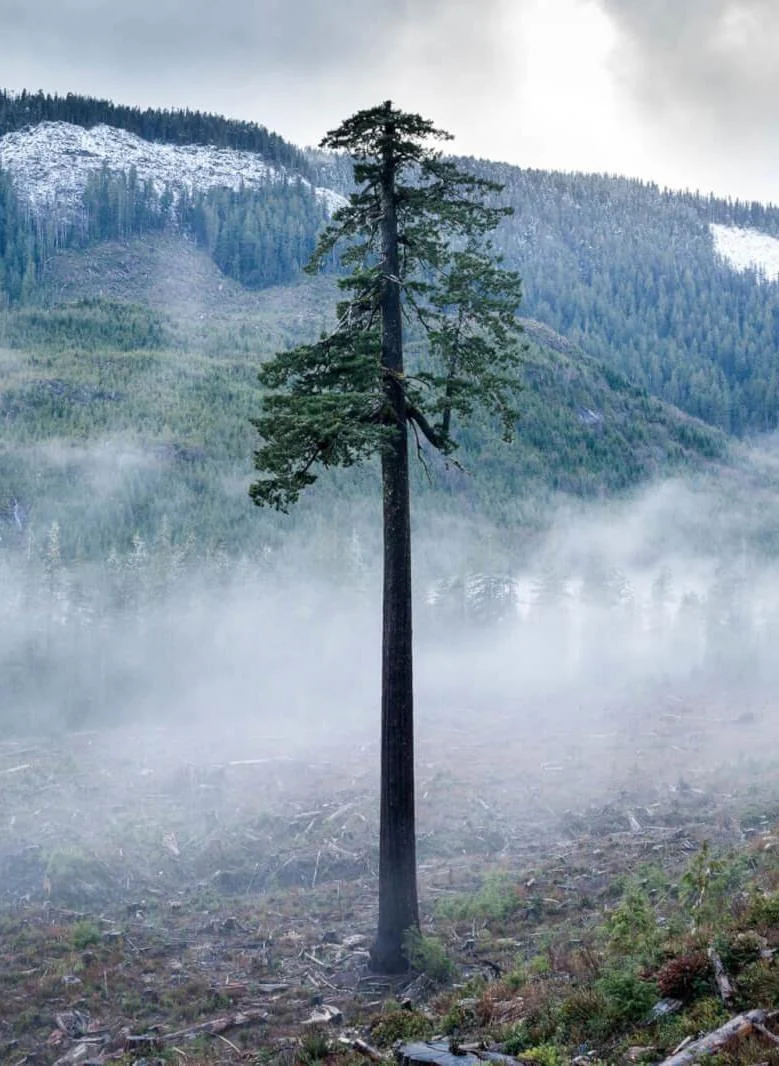
A lab test looks at one point (one tree). BioTwin looks at the whole (the forest).
42
The lab measures biomarkers chosen in advance. A Bio-Signature groups related biomarker signals and their relationships into one result.
Act 6 · Your biology
One tree versus the forest.
42
A biomarker shows one tree. A Bio-Signature connects related signals and reveals the state of the forest.
07
Act 7
The trajectory.
43
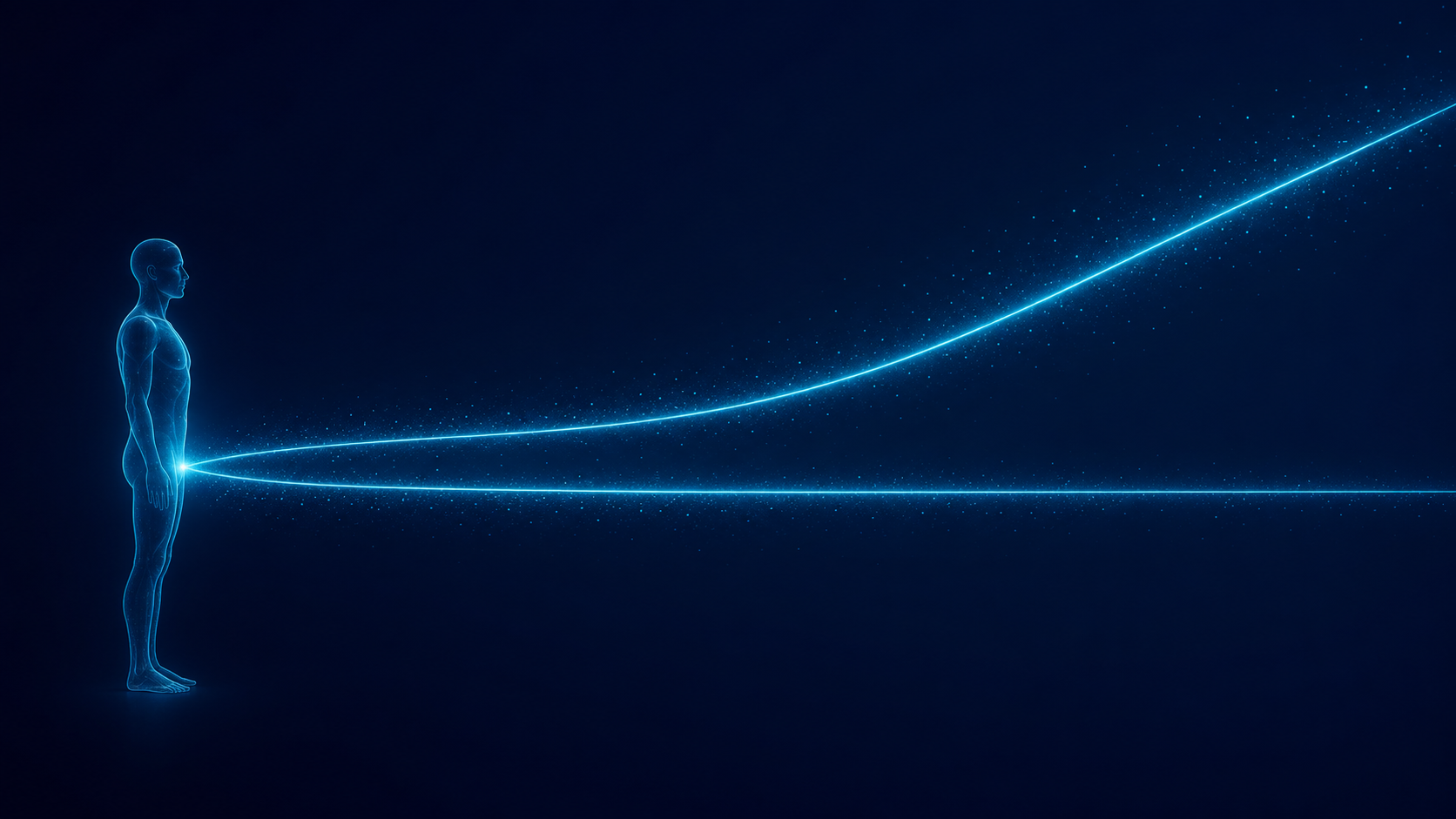
The move from photograph to film.
Act 7 · The trajectory
First, your starting point.
44
The first analysis creates the individual reference: the zero point everything will be compared against.
Act 7 · The trajectory
A complete photograph of you, as a starting point.
45
However rich it is, a single analysis is still a snapshot.
Act 7 · The trajectory
Then more measurements are added.
46
Every new measurement enriches the model instead of starting over.
Act 7 · The trajectory
The photographs become a film.
47
That is the whole point of a trajectory: direction matters more than an isolated point.
Act 7 · The trajectory
See what is changing.
48
What is moving, in which direction, and whether an action produces a measurable signal.
08
Act 8
Act earlier.
49
What all of this is actually for.
Act 8 · Act
Adapting your habits to your biology, not to the average.
50
The personalization problem raised in act 1 finds its answer here.
Act 8 · Act
Arriving better prepared in front of a professional.
51
The twin replaces no one. It helps you ask better questions.
Act 8 · Act
Moving from reactive to preventive.
52
Understand earlier so you can adjust earlier.
Act 8 · Act
What TwinMe does not do.
It is not a diagnosis.
It does not replace a doctor.
It does not predict anything with certainty.
53
The technology is not authorized as a medical device in Canada or the United States.
Two brands, one twin
BioTwin
BioTwin, a digital health technology company, develops the virtual twin technology and carries its clinical applications.
TwinMe
TwinMe is the platform that builds your twin, talks directly with users and offers non-medical wellness programs.
BT
BioTwin develops and validates the technology, together with the regulated clinical pathways. TwinMe applies that technology to wellness programs open to everyone. Same twin, two front doors.
In short
Understand. Track. Act earlier.
54
End of the walkthrough. The two natural next steps: pick a program, or compare BioTwin with the other options.
What BioTwin is, and what it is not
What it is
BioTwin develops virtual twin technology. TwinMe, its non-medical wellness experience, is a software-based algorithmic reading of your wellness, from signals captured in a few drops of dried blood.
What it is not
Not a laboratory test or a medical test: no molecule is quantified and no diagnosis is made. In Canada and the United States, BioTwin is not authorized as a medical device.
55
BioTwin’s cancer screening decision-assistance pathway is available only through participating physicians in authorized UAE clinical settings. BioTwin is pursuing its regulatory plans with Health Canada and the FDA.