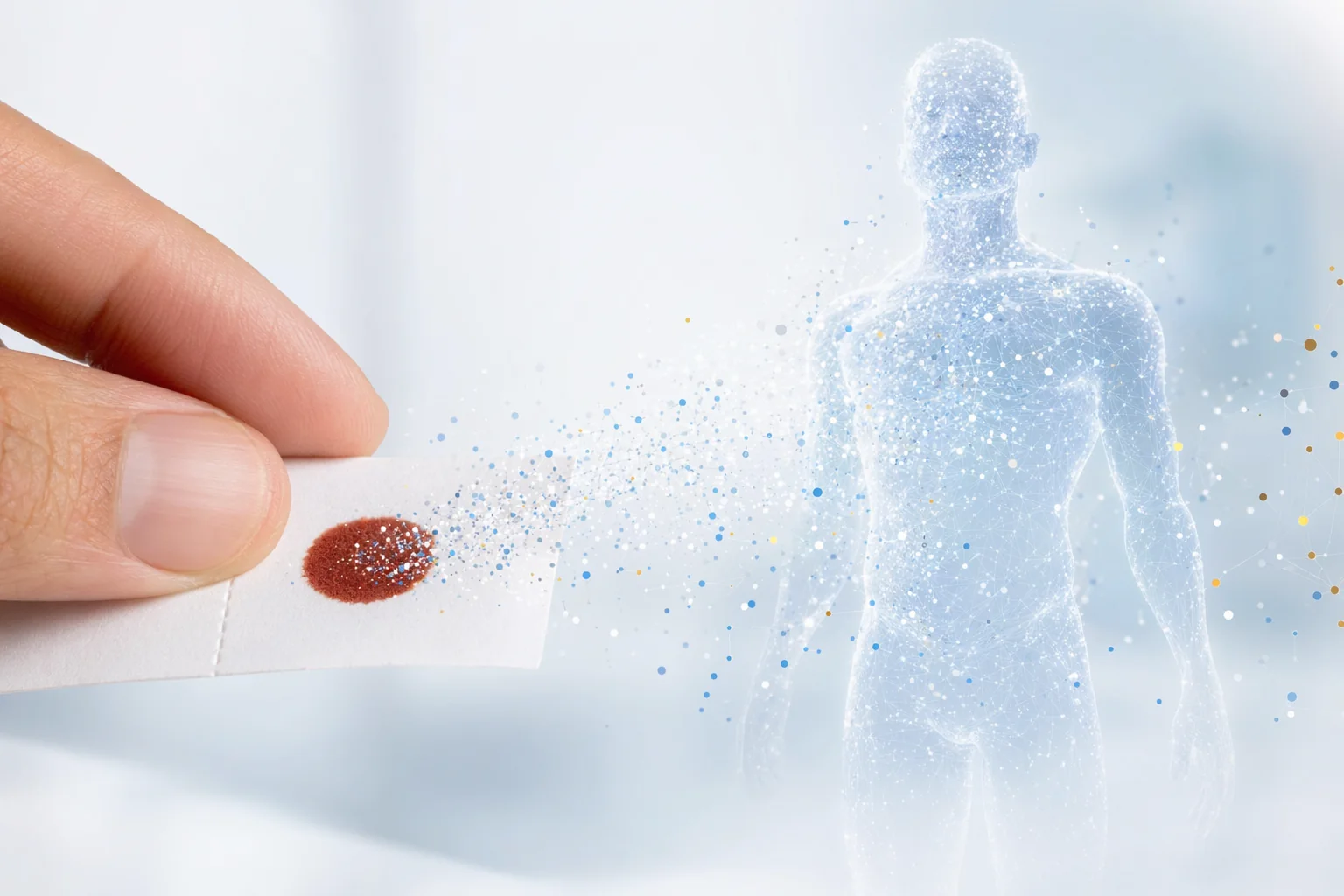

What do your metabolites reveal?
Metabolites provide information about some aspects of how your body works, influenced by your biology and everyday life.
This presentation follows four ideas: what a metabolite is, why metabolomics is informative, how everyday life shapes metabolites, and what a single sample can show.
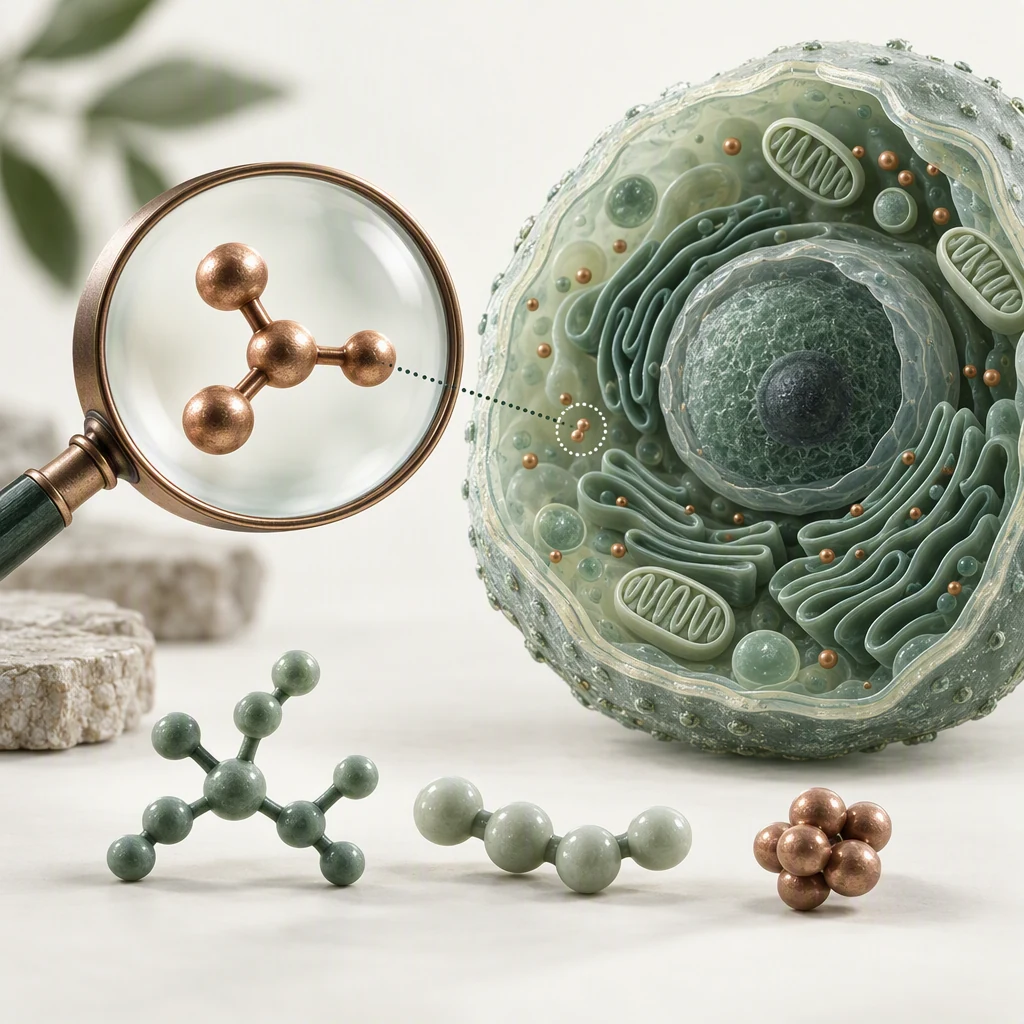
What is a metabolite?
A metabolite is a small molecule used, transformed or produced by your body.
- Used
- Transformed
- Produced
Glucose, lactate and amino acids are examples of metabolites. Metabolomics studies a collection of metabolites present in a sample, such as a blood sample.
A metabolite can serve as a biomarker when it is measured as an indicator of a biological process in a defined context. Not all metabolites are therefore biomarkers.
Scientific references
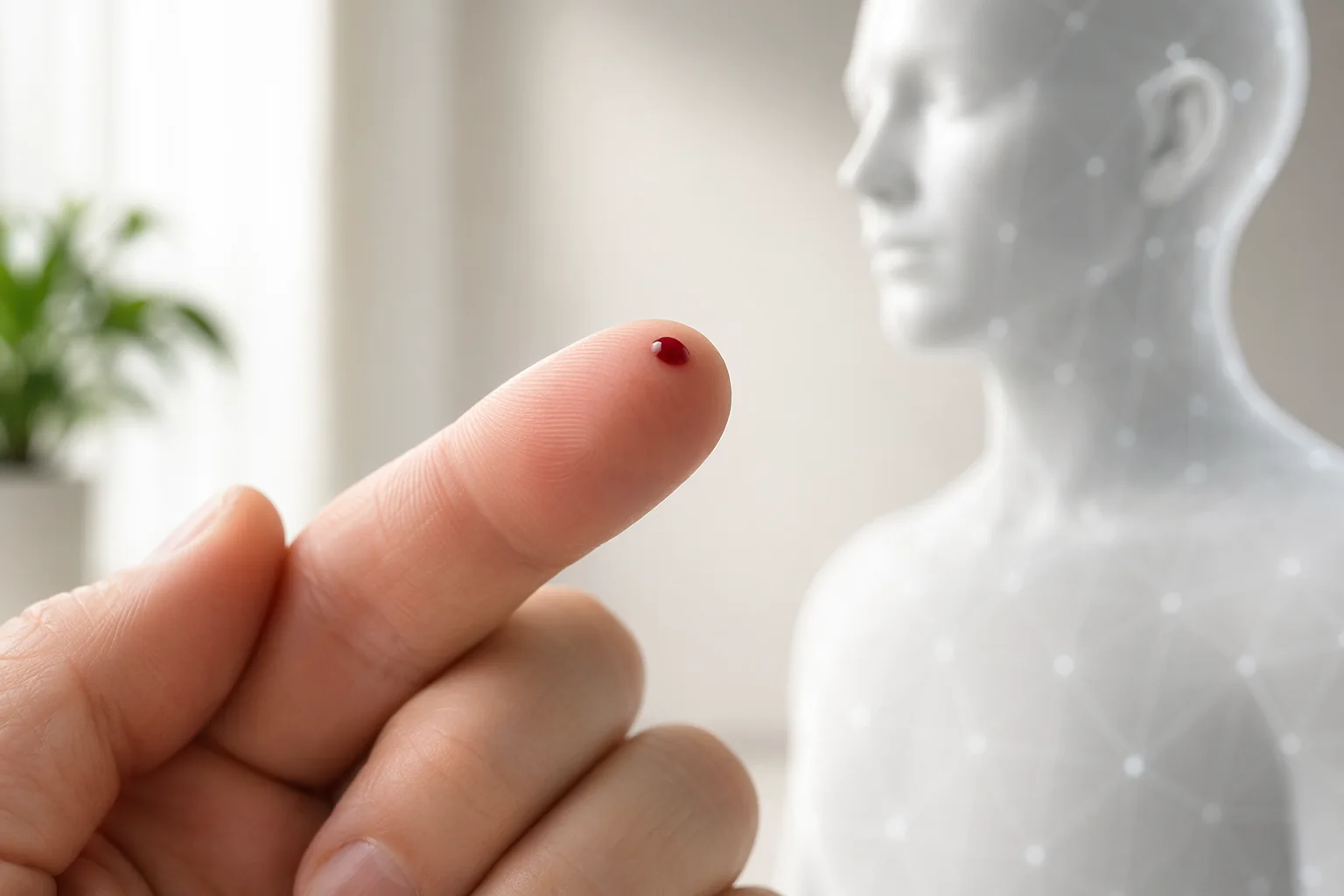
Metabolomics studies a whole collection.
Glucose, lactate and amino acids are examples of metabolites. Metabolomics studies many of them together, in one sample such as a blood sample.
A metabolite can serve as a biomarker when it is measured as an indicator of a biological process in a defined context. Not all metabolites are therefore biomarkers.
Scientific references
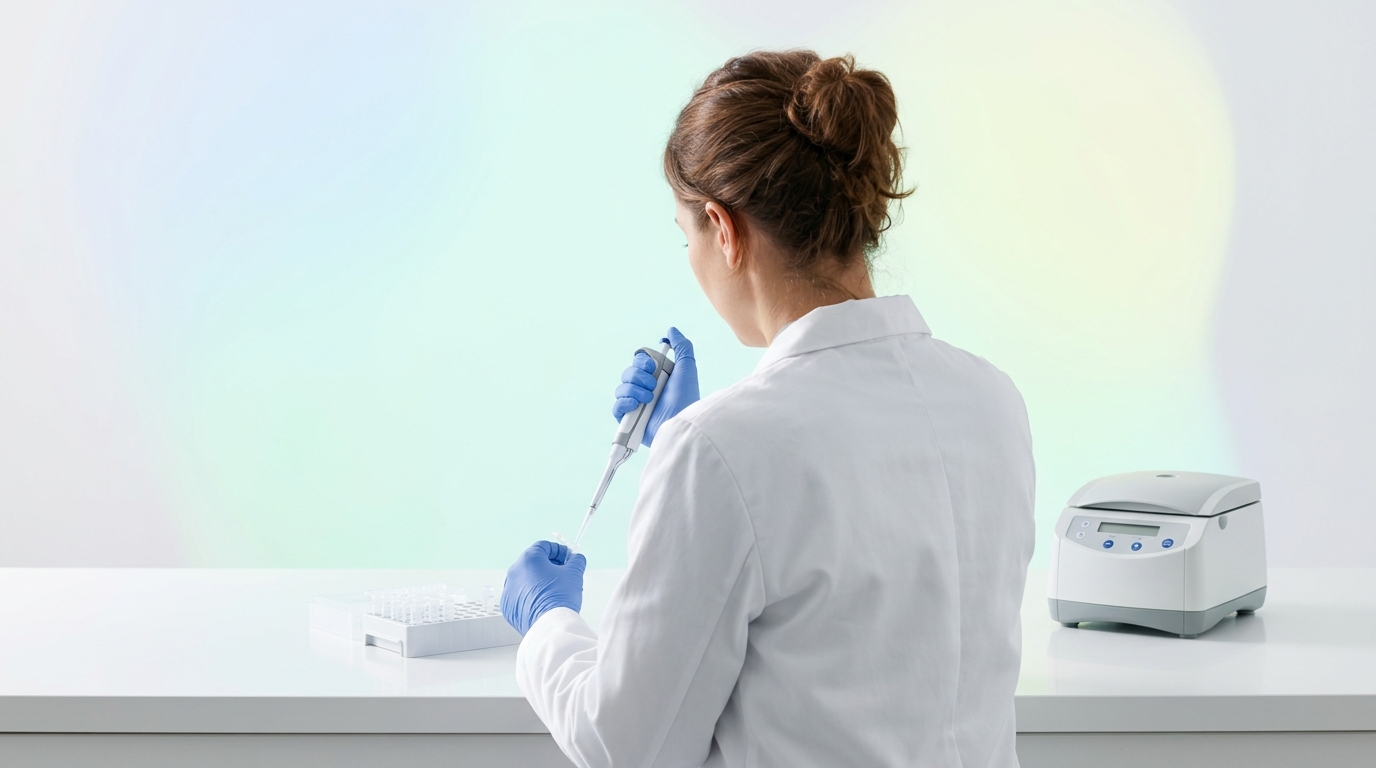
Analyzed in the laboratory.
Analytical chemistry, including high-resolution mass spectrometry, examines the metabolites present in each sample.
Metabolomics relies on analytical chemistry to detect metabolites in a sample. The explanation of mass spectrometry has its own page.
Scientific references
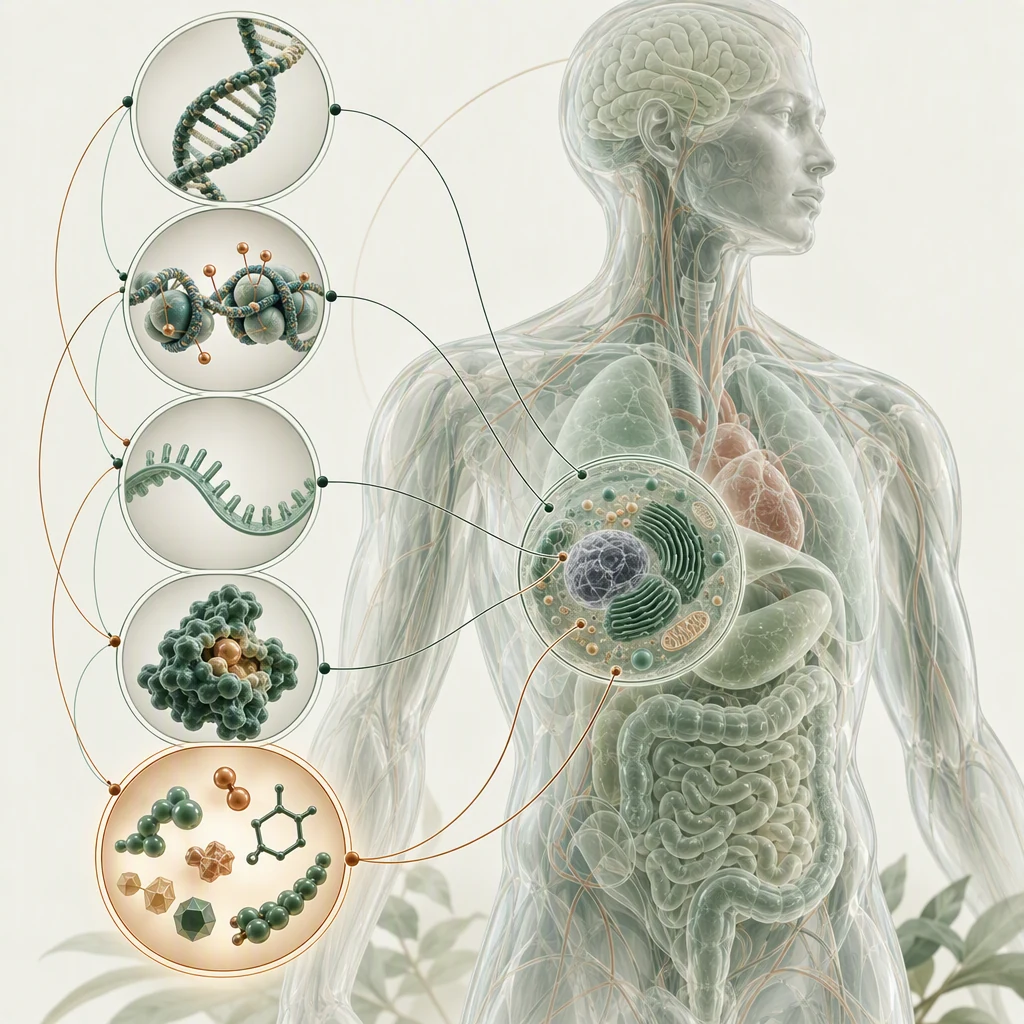
Why is metabolomics so informative?
Metabolites take part in biological reactions and reflect some of their effects, providing clues about current activity in the body.
- DNA
- Epigenetics
- RNA
- Proteins
- Metabolites
DNA carries genetic information. Epigenetics helps regulate gene activity. RNA relays some of this information. Proteins carry out many functions. Metabolites provide information about current biological activity.
Phenotype means the body’s observable characteristics. Metabolites are close to some of these aspects, without describing all of them.
These layers interact: the omics complement one another, and none captures all of biology.
Scientific references
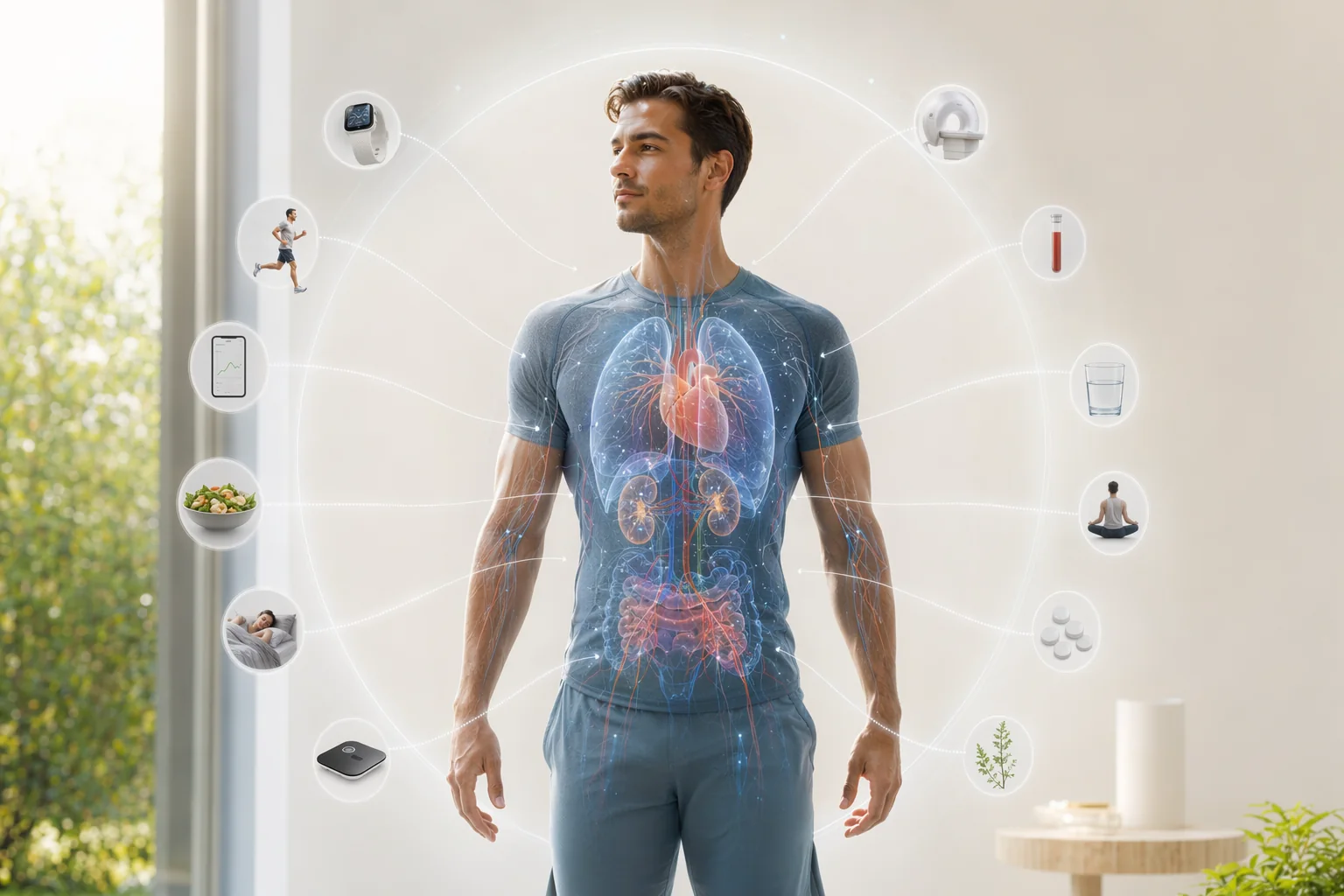
Five complementary views. None tells the whole story.
These layers interact: the omics complement one another.
- DNAcarries genetic information
- Epigeneticshelps regulate gene activity
- RNArelays part of this information
- Proteinscarry out many functions
- Metabolitesreflect current biological activity
Phenotype means the body’s observable characteristics. Metabolites are close to some of these aspects, without describing all of them.
Scientific references
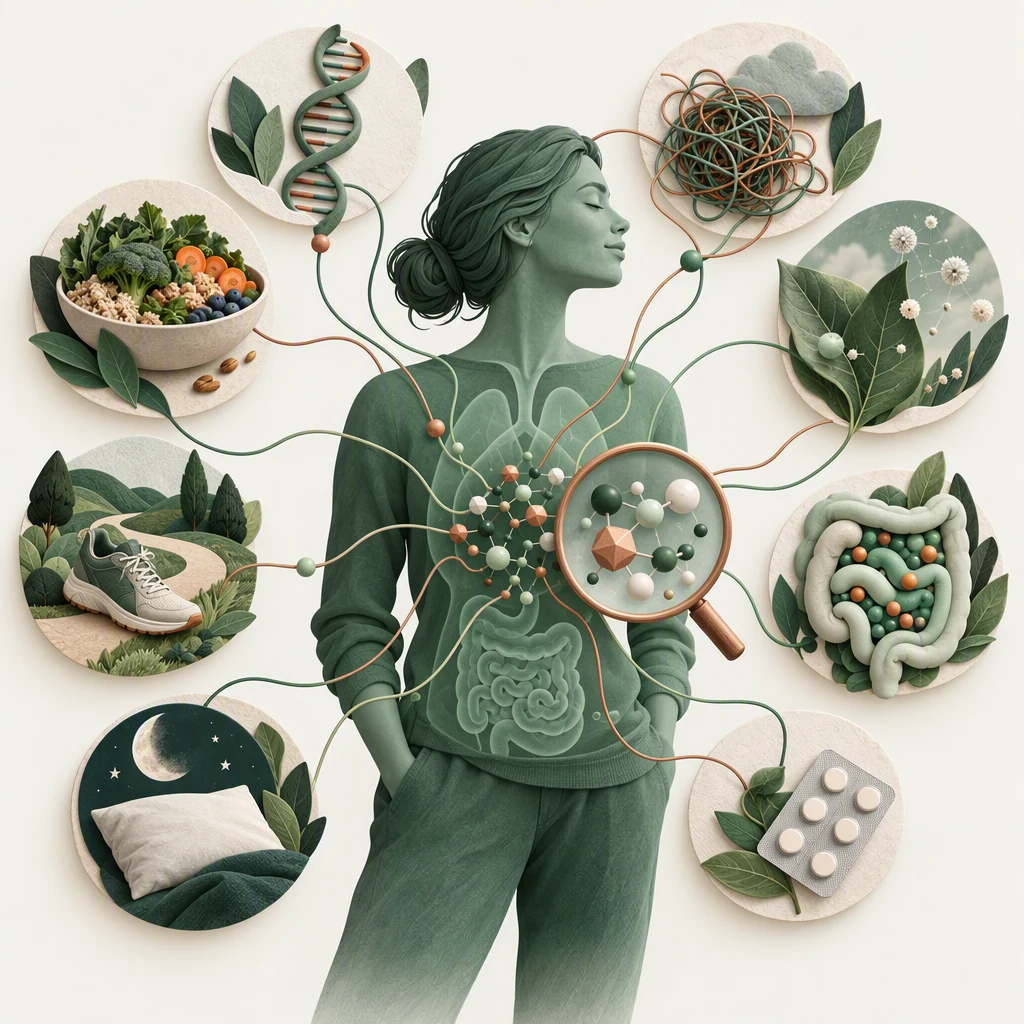
Everyday life meets your biology.
Genes, food, activity and the environment influence the metabolites we measure.
- Biology
- Lifestyle
- Environment
The microbiome also contributes to the metabolites measured. These influences combine and vary from one person to another.
A difference shows an observed change. On its own, it does not establish the cause.
Scientific references

A change is a clue, not a cause.
The microbiome also contributes. These influences combine and vary from one person to another. On its own, a difference does not establish its cause.
The microbiome also contributes to the metabolites measured. These influences combine and vary from one person to another.
A difference shows an observed change. On its own, it does not establish the cause.
Scientific references

One sample, one snapshot.
Repeated samples, taken under comparable conditions, can help observe change.
- One sample
- Another moment
Each sample describes one moment.
Meals, time of day, exercise, medicines and the measurement method can influence results. Conditions need to be sufficiently comparable.
Successive samples do not provide continuous monitoring.
Scientific references

Comparable conditions make comparisons meaningful.
Meals, time of day, exercise, medicines and the measurement method can influence results. Successive samples do not provide continuous monitoring.
Meals, time of day, exercise, medicines and the measurement method can influence results. Conditions need to be sufficiently comparable.
Successive samples do not provide continuous monitoring.
Scientific references
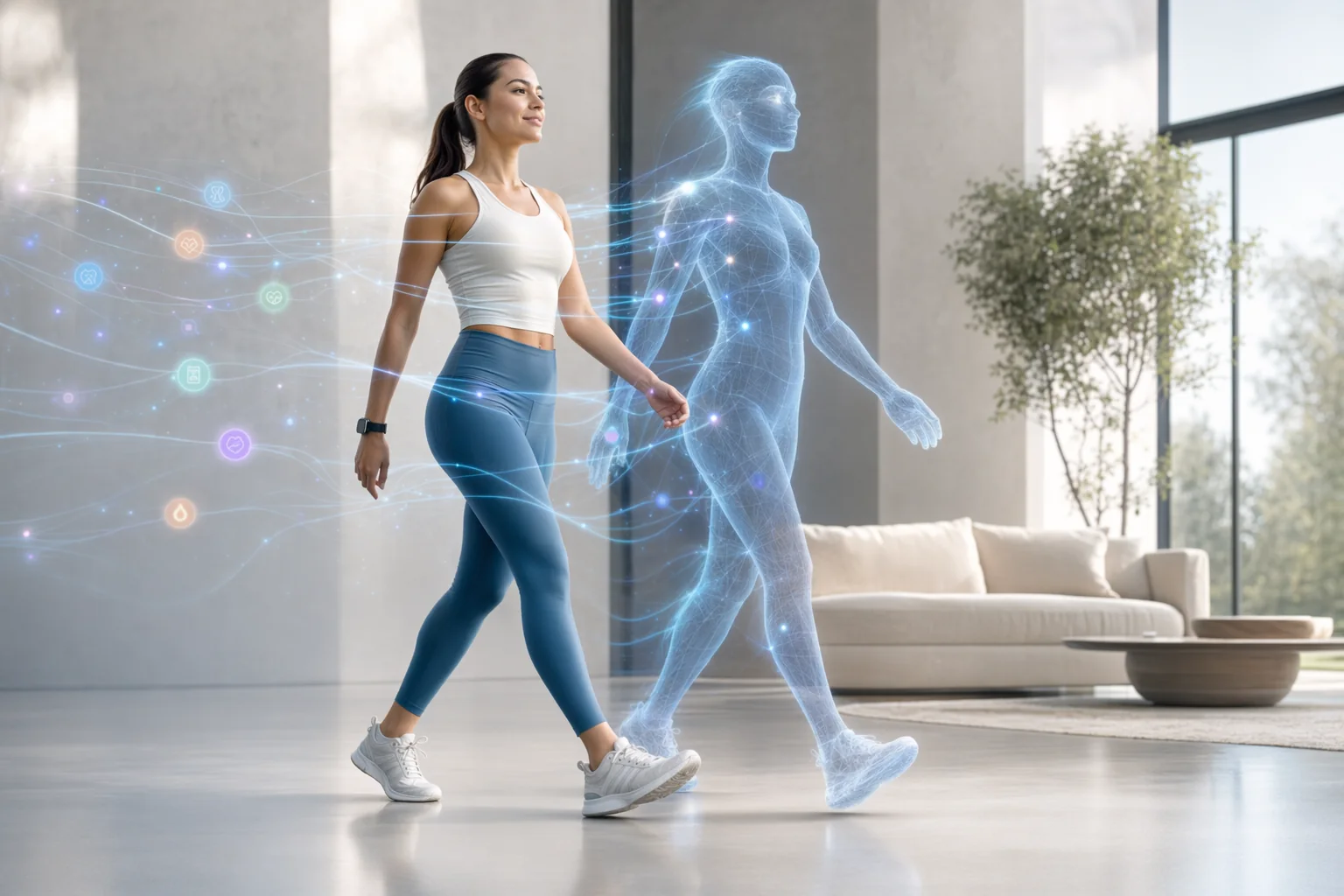
Three ideas to remember.
- MetaboliteA small molecule used, transformed or produced by your body.
- MetabolomicsThe study of many metabolites together, in one sample.
- Over timeRepeated samples, under comparable conditions, can help observe change.
These three ideas summarize the presentation. Each one is detailed, with its sources, on the preceding slides.

Next: one tree, or the whole forest.
Bio-Signatures read several biomarkers together, around one biological question.
What BioTwin is, and what it is not: BioTwin develops virtual twin technology, and TwinMe, its non-medical wellness experience, is a software-based algorithmic reading. Not a laboratory test or a medical test: no molecule is quantified and no diagnosis is made. In Canada and the United States, BioTwin is not authorized as a medical device.
The Bio-Signatures presentation continues from here: how biomarkers, including metabolites, are read together around a biological question.