
Where digital twin technology comes from
Digital twins were born in aerospace and manufacturing. BioTwin applies the same rigor to the human body.
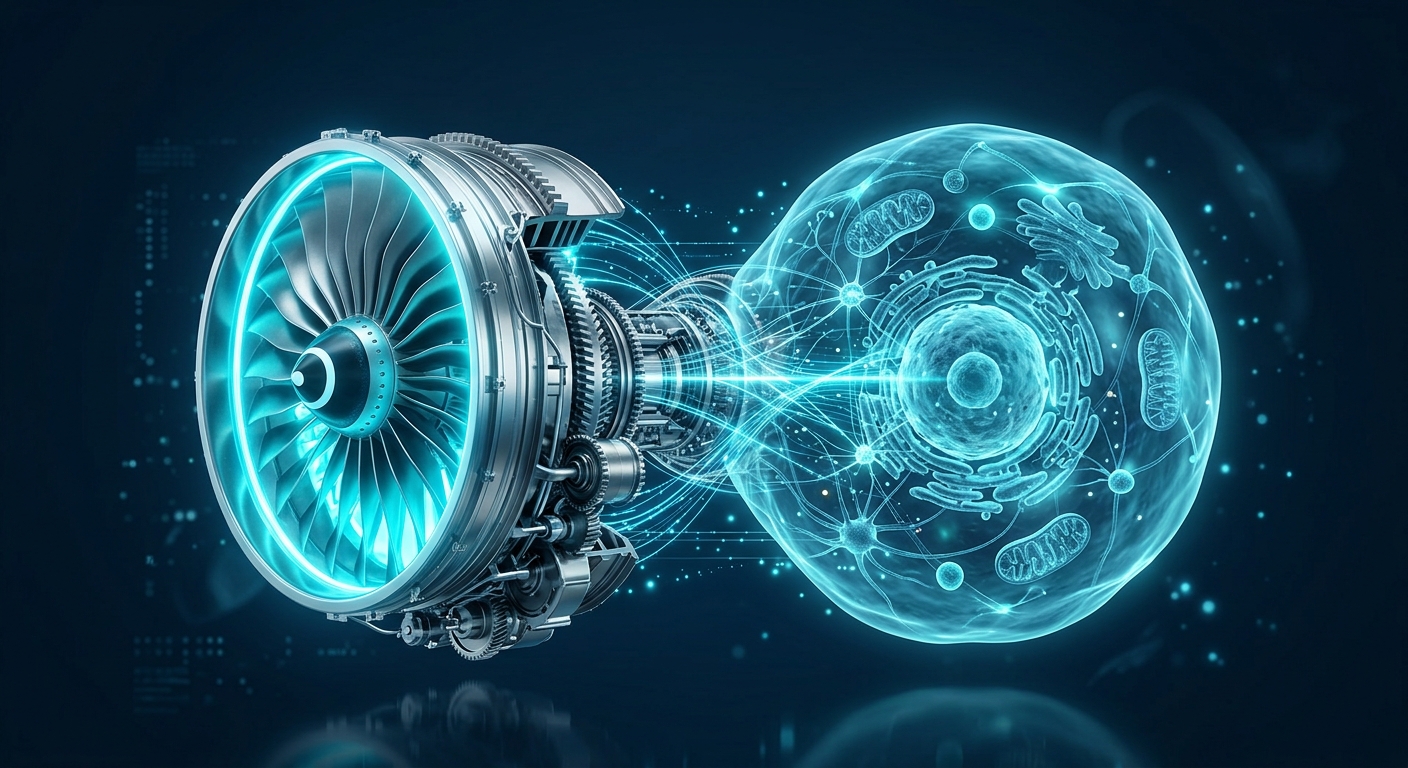
Jet engines, rockets, factories
Digital twin technology did not start in healthcare. It started on launch pads and shop floors. NASA used early forms of it during the Apollo program, running software models of spacecraft systems on the ground in parallel with what was happening in orbit. Aircraft and engine makers use digital twins to track real wear on individual engines. Siemens runs digital twins of entire factories to predict failures before they happen. When that same technology is applied to a human being rather than a machine, BioTwin calls it a virtual twin.
In each case the pattern is the same. A physical asset matters too much to leave unmonitored. A software model of that asset is kept continuously in sync with real-world data. Engineers use the model to predict when a part will fail, to tune performance, and to test changes before touching the real thing.
From a rocket to a human body
A human body is obviously not a jet engine. The biology is messier, the sensors are harder to place, and the stakes are personal rather than industrial. But the conceptual leap is smaller than it looks. What carries over from aerospace is the discipline: regular updates instead of occasional tests, multi-source integration instead of a single parameter, and attention to signals you cannot yet feel.
What changes is the input. Instead of vibration sensors and temperature probes, BioTwin reads biomarker-derived metabolic signals. A Bio-Signature sample processed through mass spectrometry yields more than 30,000 biomarker-derived metabolic signals, which is more than enough to feed a meaningful model.
Why BioTwin went this way
A single standard panel is a snapshot. It tells you where selected analytes were at one moment. A virtual twin is a living companion. It keeps learning as new samples and new analyses come in, and it lets you ask questions a static report cannot answer.
BioTwin exists because human health deserves the same modeling rigor that engineers already apply to a jet engine or a rocket. If engineers keep a live model of a single jet engine, the idea that a person should manage their own biology with a piece of paper and a yearly checkup starts to feel out of date.