
Biomarkers, explained simply
A biomarker is a tiny molecular signal your body produces. It is how your biology leaves traces you can measure.
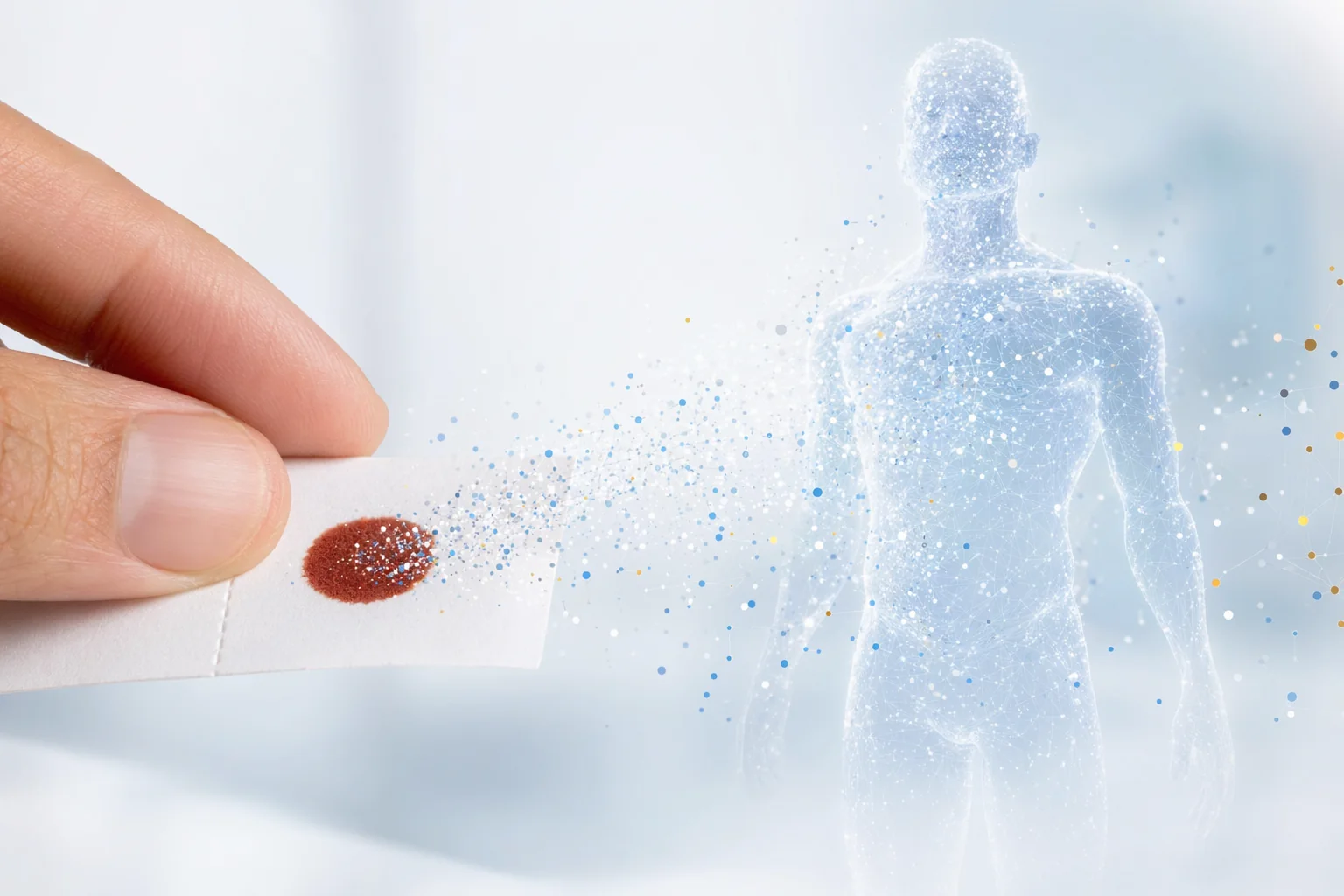
What a biomarker actually is
A biomarker is a molecular signal produced by your cells, tissues, and microbiome. Every process in your body, from how deeply you recover during sleep to how your system handles stress and how well your cells use sugar, leaves traces you can detect in blood, urine, or saliva. Those traces are biomarkers.
Most people hear the word biomarker and think of a short list of familiar clinical analytes. BioTwin works with patterns of signals: amino acid patterns, fatty acid patterns, oxidative stress Bio-Signatures, energy metabolism intermediates, and other metabolic features can all contribute to a Bio-Signature.
A biomarker on its own is just a number. What makes it meaningful is context: how it compares to a healthy reference population, how it interacts with other biomarkers, and how it changes over time. That is the job of your virtual twin.
What BioTwin reads
From a Bio-Signature sample, BioTwin analyzes more than 30,000 biomarker-derived metabolic signals. Those signals create a high-dimensional dataset for the BioTwin model. Each wellness program then organizes its results into Bio-Signatures that group biomarkers related to the same health or well-being dimension. Longevity, Elite Health Optimization and Weight and Cholesterol Management are TwinMe wellness programs. The Cancer Risk Program is in development and is not available for purchase.
That is why a TwinMe program is different from a lab value. A lab value tells you whether one number is in or out of range. A TwinMe program describes how an entire functional system is doing, based on the molecular evidence available.
Why patterns matter
A standard lab panel ordered by a clinician reports selected analytes at one point in time, and it answers that question well. BioTwin reads high-dimensional metabolic signals from a Bio-Signature sample and follows how their patterns move from one sample to the next. That is what turns a static snapshot into a living model of your biology.
Keeping the full signal profile is also what lets your twin improve over time. New analyses can be applied to your stored signal profile, so the picture can keep sharpening without a new kit.