
A virtual twin is not a scan
A scan or a standard lab panel gives you a snapshot of this moment. A virtual twin gives you a living model that learns.
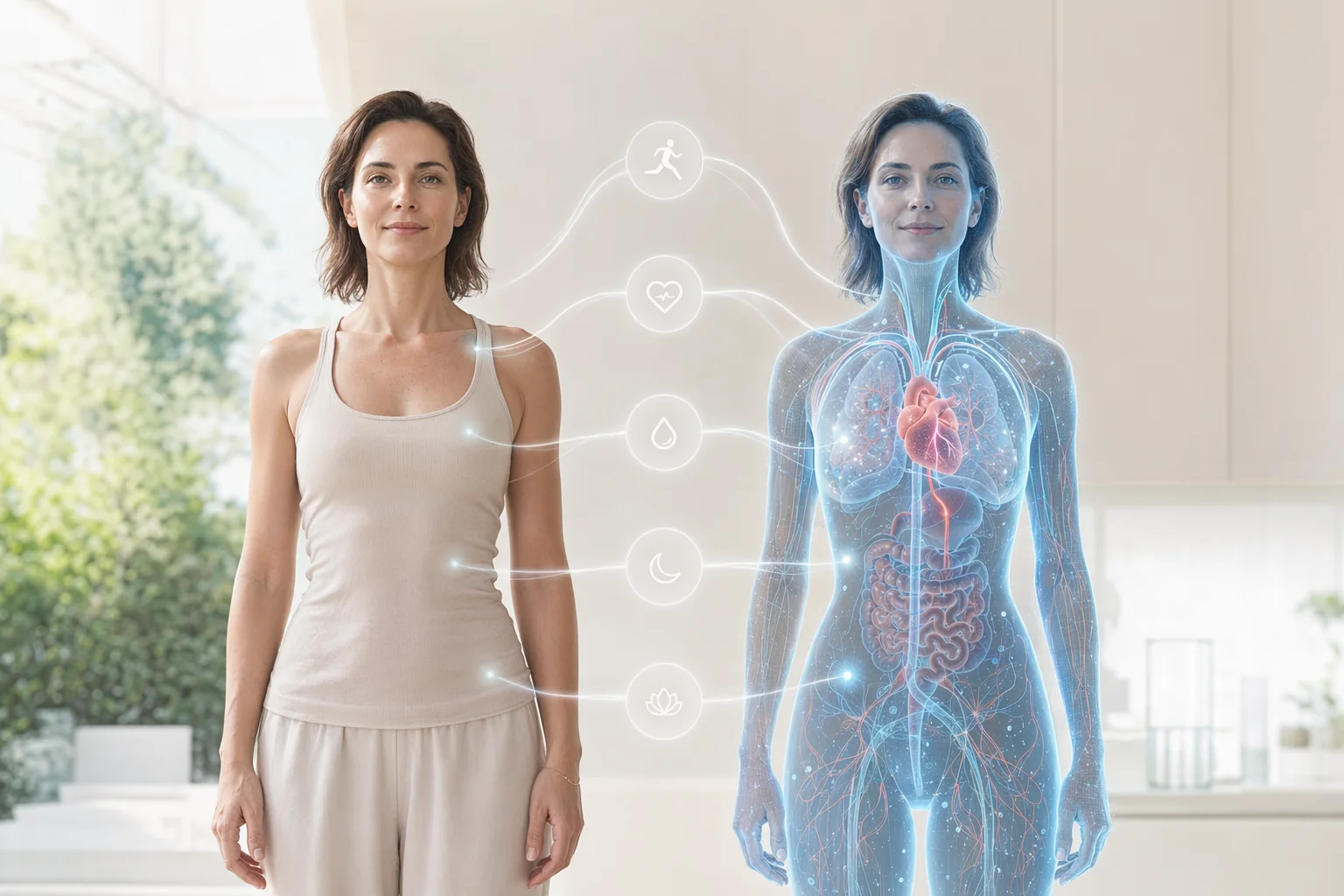
What a scan tells you
A scan or a standard lab panel measures selected parameters, compares them to population norms, and flags what falls outside the range. That is its job. It is fast, it is standardized, and it is the right tool when a clinician needs an answer about something specific in front of them, today.
The limitation is built into the format. A scan is a photograph of one moment. It says normal or abnormal against an average stranger. It does not know what you were last year, what you are trending toward, or how your biology responds when you change something in your life. Useful, but static.
What a virtual twin tells you
A virtual twin starts from a different kind of input. A Bio-Signature sample, processed differently, yields more than 30,000 biomarker-derived metabolic signals. Those signals feed a model that represents your specific biology, not an average. The model sharpens over time as more samples come in. Our goal is to let you explore what-if scenarios on top of its current state.
That opens a different kind of question. Not only "am I inside the personal baseline today", but "what is my trajectory", "how does my body respond when I sleep more", "what happens if I follow this optimization protocol for three months". A twin is built for those questions because it is a model of you, not a comparison to everyone. It already follows your trajectory from one sample to the next; exploring what-if scenarios remains a goal.
When each is right
A scan is the right tool for acute diagnosis. If something is wrong right now, a clinician needs a clean, standardized measurement in the next hour, and that is exactly what a standard blood panel provides. BioTwin does not replace that workflow.
A virtual twin is the right tool for longitudinal insight and prevention. It is built for the questions that take months or years to answer, the kind of questions the Longevity and Elite Health Optimization programs are designed around. BioTwin is explicitly the second kind of instrument, not a substitute for the first.